Lifestyle & Accessories
The accessories we choose and the lifestyle decisions we make speak volumes before we utter a single word. From the timepiece that graces your wrist to the shoes that carry you through your day, each element contributes to a carefully curated personal narrative. In an era of fast consumption and fleeting trends, understanding the deeper significance of quality accessories has become both an art and a necessity for those seeking to cultivate a refined, intentional approach to style.
This exploration delves into the multifaceted world of lifestyle essentials, examining not merely what to acquire, but why certain choices endure whilst others fade. Whether you’re drawn to the mechanical poetry of fine watchmaking, intrigued by the psychological impact of your wardrobe, or seeking to understand the heritage behind precious gemstones, this resource offers a comprehensive foundation. The following insights bridge heritage craftsmanship with modern practicality, revealing how thoughtful accessory selection can elevate your everyday experience.
The Enduring Art of Timekeeping
Watches represent perhaps the most complex and storied category within lifestyle accessories, serving simultaneously as functional tools, artistic expressions, and investment pieces. The British market has long held a particular appreciation for fine horology, with collectors and enthusiasts valuing both the mechanical ingenuity and the cultural heritage these instruments embody.
Heritage Craftsmanship and Modern Innovation
Swiss watchmaking traditions stretch back centuries, with specific regions developing distinct specialisms. The Vallée de Joux became synonymous with complicated movements, whilst Geneva established itself as the epicentre of decorative arts in horology. For the modern UK collector, understanding these geographical distinctions provides valuable context when evaluating timepieces. Independent watchmakers have recently revitalised the industry, challenging established manufacturers with innovative approaches to traditional complications.
The evolution from pocket watches to wristwatches reflects broader social transformations. What began as a military necessity during the Boer War gradually became the standard format, fundamentally altering how we interact with time. This historical transition matters because it established the wristwatch as both a practical instrument and a visible style statement, a duality that persists in contemporary accessorising.
Understanding Watch Mechanics and Features
The technical aspects of watchmaking often intimidate newcomers, yet grasping a few fundamental concepts dramatically enhances appreciation. An exhibition caseback, for instance, transforms a closed instrument into a window onto mechanical artistry, revealing the ballet of gears and springs that power the watch. Meanwhile, practical features deserve equal attention:
- Rotating bezels serve specific functions in dive watches, allowing underwater timing without operating the crown
- Bracelet expandability accommodates wetsuits for divers or simply provides comfort during temperature fluctuations
- Dial simplicity enhances readability, particularly crucial in professional or low-light contexts
- Strap materials follow unwritten etiquette rules, with leather generally preferred for formal occasions and metal bracelets offering versatility
Watch winders maintain automatic timepieces when not worn, though opinions divide on their necessity. For those with rotating collections, they prevent the inconvenience of resetting complications, whilst purists argue regular wearing provides sufficient power reserve.
Timepieces as Personal Statements
The intersection of social signalling and mechanical mastery cannot be ignored. A watch communicates values—appreciation for craftsmanship, attention to detail, or perhaps technological progressiveness through hybrid smartwatches. These modern iterations bridge digital utility with traditional aesthetics, appealing to professionals seeking health tracking capabilities without sacrificing elegance. Battery life management and privacy considerations represent the practical realities of this category.
Material choices carry their own messages. Bronze watches develop unique patinas, celebrating imperfection rather than resisting it. Titanium offers remarkable weight advantages, making substantial complications comfortable for extended wear. Personalisation through engraving transforms a timepiece into an heirloom, layering personal narrative onto existing heritage. Indeed, watches function exceptionally as cross-generational gifts, carrying both monetary and sentimental value. The practice of gifting gold Sovereigns follows similar logic within British tradition—tangible assets with enduring worth.
Building a Considered Wardrobe
Beyond individual accessories, holistic lifestyle choices manifest most visibly through wardrobe decisions. The garments and accessories we select daily shape not only how others perceive us, but fundamentally influence our own psychology and performance.
The Psychology of Dress
Recent research into “enclothed cognition” demonstrates that clothing genuinely affects cognitive processes. The tailored jacket that makes you feel authoritative actually enhances confidence and decision-making, whilst comfortable yet polished remote work attire maintains professional mindset despite domestic surroundings. This psychological dimension explains why successful individuals often develop personal “uniforms”—reducing decision fatigue by establishing reliable frameworks.
Colour psychology plays a subtler role. Navy blue commands respect in British professional contexts, whilst certain shades energise or calm depending on personal response. Understanding your reactions to colours allows strategic wardrobe planning that supports your daily objectives rather than undermining them.
Quality Over Quantity
The cost-per-wear calculation revolutionises purchasing decisions. A well-constructed leather accessory costing substantially more than a synthetic alternative often proves economical over its lifespan. Different leather types offer varying durability characteristics:
- Full-grain leather develops character whilst maintaining structural integrity for decades
- Top-grain leather provides a balance of refinement and resilience
- Corrected-grain leather offers uniformity but limited longevity
Natural fibres similarly outperform synthetic alternatives in most lifestyle contexts, offering superior breathability, comfort and environmental credentials. Care label decoding becomes essential—understanding that certain symbols indicate delicate construction requiring gentle handling to preserve your investment.
Seasonal Transitions and Versatility
British weather’s unpredictability demands versatile accessories that transition gracefully between seasons. Seasonal strap changes on watches exemplify this adaptability—lighter fabrics for summer, robust leather for autumn. The formal versus casual crossover represents another crucial consideration. Accessories that bridge these contexts offer remarkable utility, reducing the total number of items required whilst ensuring appropriateness across varied situations.
A watch positioned as a conversation starter—perhaps a rescued vintage piece with an intriguing backstory—serves social functions beyond mere timekeeping. The bracelet stack technique, layering complementary pieces, adds personality to otherwise conventional ensembles. These approaches to harmonising accessories within your total look demonstrate sophistication without ostentation.
Footwear Fundamentals
Shoes form the literal foundation of your appearance, yet their importance extends beyond aesthetics. Understanding sole materials illuminates the relationship between construction and application. Leather soles offer traditional elegance and breathability but require careful maintenance and weather consideration. Rubber compounds provide traction and weather resistance, making them practical for British climates. The commuter shoe strategy acknowledges this reality—many professionals maintain office footwear, travelling in weather-appropriate alternatives.
Breaking in new shoes properly prevents discomfort and ensures longevity. Gradual wearing, targeted stretching, and appropriate conditioning prepare leather to mould to your foot without damage. Basic shoe care includes regular cleaning, conditioning, proper storage with shoe trees to maintain shape, and prompt sole protection or repair. These practices extend lifespan considerably, making quality footwear a genuine investment rather than a recurring expense.
Fine Jewellery and Precious Gemstones
Gemstones carry symbolic weight accumulated over centuries, making them particularly meaningful for significant occasions or heirloom pieces. Rubies symbolise passion, courage and vitality across cultures, their vivid crimson commanding attention and conveying boldness. Sapphires hold especial resonance within British heritage—royal sapphires feature prominently in the Crown Jewels and contemporary royal jewellery, most famously in engagement rings passing through generations.
Whilst blue sapphires dominate popular imagination, green sapphires represent an intriguing alternative. Their rarity and distinctive character appeal to those seeking individuality without abandoning traditional gemstone categories. Understanding these symbolic dimensions and relative rarities empowers more meaningful selection, whether purchasing for yourself or selecting a gift with lasting significance.
Posture, Presence and the Silent Language of Style
Physical presentation extends beyond accessories into embodiment itself. The connection between physical alignment and the psychological projection of elegance operates bidirectionally—confident posture influences mood, whilst positive mindset naturally improves carriage. Power pose theory, though debated in academic circles, reflects observable reality: shoulder alignment, eye contact, and deliberate hand placement communicate self-assurance.
The static presence and silhouette one presents in social settings particularly matters in British contexts, where understated confidence often carries more weight than overt displays. Grouping dynamics affect how we’re perceived—standing slightly apart from tight clusters conveys independence, whilst engaged participation demonstrates social fluency. Managing long standing periods at events requires subtle weight distribution strategies and, less obviously, adequate sleep. Rest profoundly impacts posture, skin quality, and mental clarity—the unglamorous foundation beneath polished presentation.
Ethical Considerations in Modern Lifestyle Choices
Contemporary consumers increasingly evaluate purchases through ethical lenses, examining supply chain transparency and environmental impact. The ethics of fashion supply chains can prove murky, with complex international production obscuring accountability. Seeking brands that demonstrate genuine commitment to fair labour practices and environmental stewardship represents values-driven accessorising.
Natural versus synthetic materials present nuanced trade-offs. Whilst natural fibres generally offer superior performance and biodegradability, certain synthetic alternatives utilise recycled content or enable technical performance impossible with traditional materials. The key lies in informed decision-making rather than dogmatic rules—understanding the full lifecycle and choosing accordingly for each specific application.
Storage and preservation practices extend product lifespans, reducing consumption frequency. Proper organisation, climate control, and shape maintenance through appropriate storage solutions demonstrate respect for quality items and align with sustainable lifestyle principles. These practices transform accessories from disposable commodities into enduring elements of personal style.
Cultivating a refined approach to lifestyle and accessories represents an ongoing journey rather than a destination. Each category explored here offers depths worth investigating further according to your particular interests and needs. The common thread throughout remains intentionality—selecting, maintaining, and wearing accessories with understanding and purpose rather than following ephemeral trends. This considered approach yields both immediate satisfaction and enduring value, creating a personal aesthetic that evolves whilst remaining fundamentally authentic.

How to Stand at a Cocktail Party to Look Engaged and Elegant?
In summary: True elegance is not about static poses but mastering a dynamic ‘social choreography’ that communicates confidence. Use your environment and specific hand positions like the ‘Belly Button Hold’ to eliminate awkwardness when you’re without a drink. Adopt the…
Read more
Posture: The Most Valuable Thing You Can Wear Is Free. Here’s How to Own It.
Contrary to the rigid advice to ‘stand up straight’, projecting true elegance and confidence isn’t about forcing a static shape. This guide reveals that the secret lies in releasing chronic tension—especially ‘tech neck’—and cultivating a dynamic physical awareness. It’s about…
Read more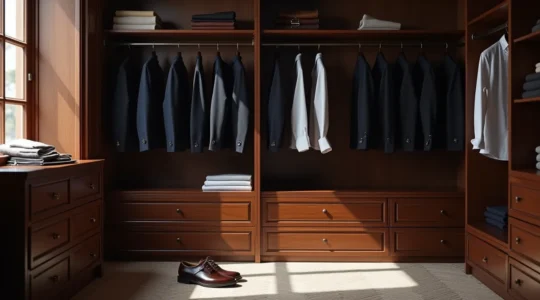
Does Dressing for the Job You Want Actually Accelerate Your Career?
The secret to accelerating your career isn’t just impressing your boss—it’s altering your own brain chemistry through what you wear. Scientific research shows that clothing doesn’t just signal to others; it primes your own mind for higher performance, a concept…
Read more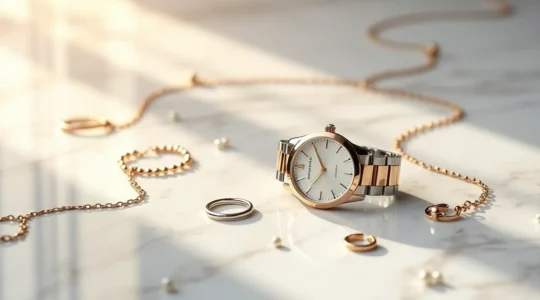
The Gentleman’s Code: How to Coordinate Your Watch with Any Accessory
Contrary to the rigid doctrines of the past, mixing metals is not a sign of sartorial carelessness but the hallmark of a confident, contemporary style. The key is not to match, but to establish a “metal hierarchy” with your watch…
Read more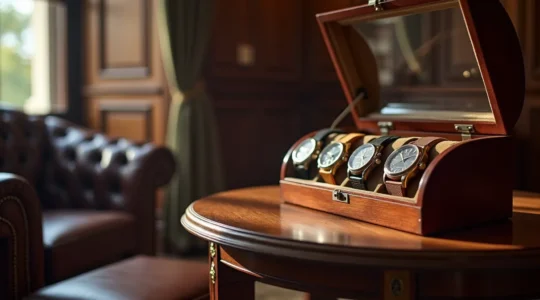
Why Do Certain Luxury Watches Open Doors in London’s Exclusive Circles?
A luxury watch in London is not a simple statement of wealth; it’s a fluent demonstration of your understanding of complex social codes. Success in elite circles hinges on subtle signalling, where the right watch acts as a ‘tribal marker’,…
Read more
How to Integrate a Smartwatch into a Corporate Wardrobe Without Looking Like a Teenager?
Contrary to popular belief, the key to wearing a smartwatch with a suit isn’t hiding the technology—it’s mastering it to project an image of controlled efficiency. Digital integration is a matter of strategy, not just aesthetics. Focus on curating notifications…
Read more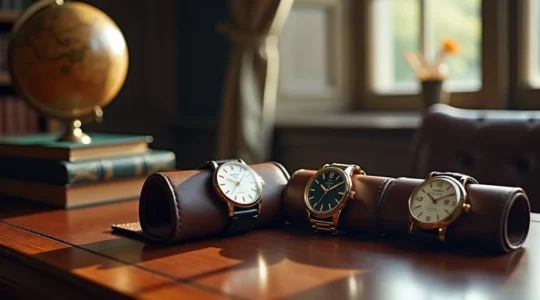
Why Do Swiss Made Watches Retain Their Value Better Than Other Origins?
A Swiss watch’s value is not just marketing; it is a tangible asset class backed by a robust, UK-centric ecosystem of service and demand. Legally enforced production standards (‘Swiss Made’) and a vast UK service network guarantee long-term repairability and…
Read more