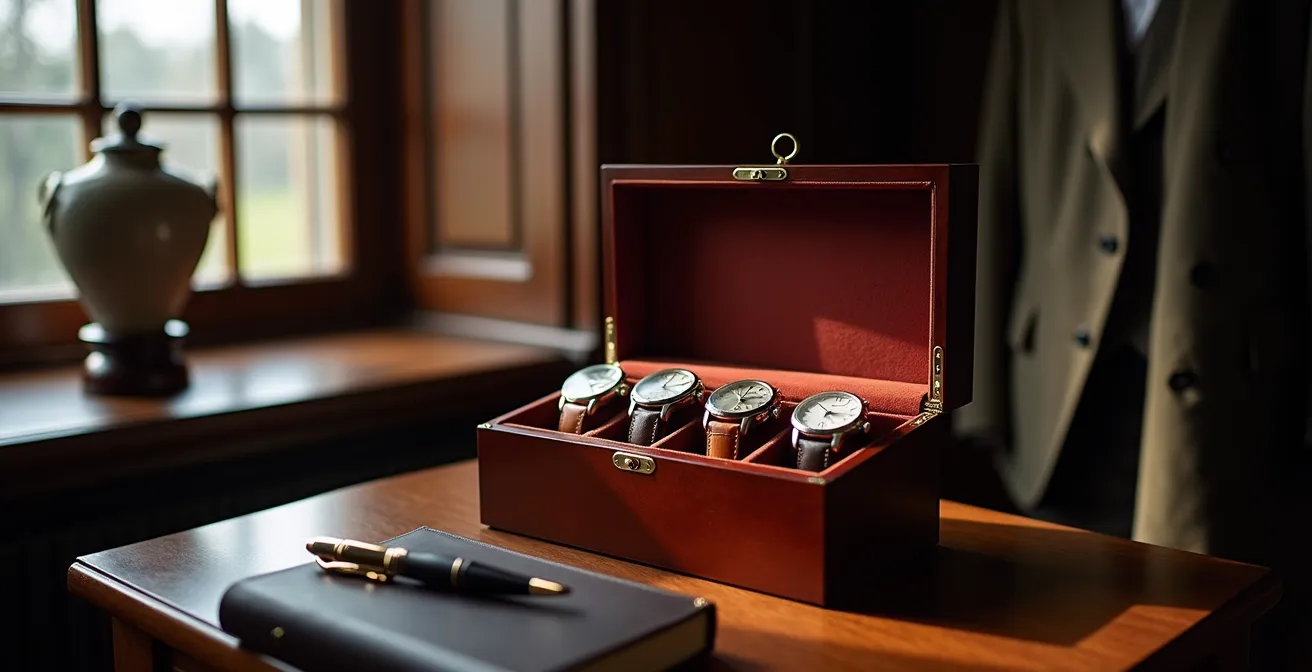
Contrary to popular belief, a powerful watch collection isn’t about acquiring status symbols; it’s about curating a portfolio of narrative tools to strategically communicate your personal brand.
- Each watch choice, from a minimalist to a skeleton dial, sends a deliberate signal about your values and approach to business.
- Mastering “horological code-switching”—adapting your timepiece for different UK social and professional settings—is a key executive skill.
Recommendation: Stop thinking about what your watch is worth and start defining what your watch says. Audit your collection as a communication device, not just an asset.
For a creative director or executive in the UK, perception is paramount. Every element of your presentation is scrutinised, from your pitch deck to your choice of footwear. In this high-stakes environment, accessories are not afterthoughts; they are strategic assets. The watch, in particular, carries a weight of meaning that few other items can match. Yet, the common advice on building a collection often falls into predictable tropes: “buy the classics,” “think of investment,” or follow rigid, outdated rules about what to wear.
This approach misses the fundamental point. For a leader, especially in a creative hub like Manchester where individuality is currency, a watch is not merely a timepiece. It is a communication device. It tells a story about your attention to detail, your appreciation for craftsmanship, your understanding of context, and your personal philosophy. But what if the key to a powerful collection wasn’t about acquiring the most sought-after models, but about mastering the art of horological storytelling? What if your collection became a deliberately curated narrative portfolio, with each piece chosen to send a specific signal in a specific context?
This guide moves beyond the platitudes of watch collecting. We will deconstruct the signals your watch choices send and provide a strategic framework for building a collection that becomes your silent brand ambassador. We will explore how to select dials that reflect your personality, use straps to transform a look, understand the power of shape and colour, and navigate the unspoken rules of formal wear with confidence. This is not about what to buy; it’s about what you want to say.
text
This article provides a structured approach to transform your watch collection into a powerful personal branding tool. Explore each section to master the subtle art of horological communication.
Summary: Building a Narrative Portfolio, One Watch at a Time
- Minimalist or Skeleton Dial: What Your Watch Choice Says About You?
- How to Change Watch Straps to Transform Your Look for an Evening Event?
- Why Gifting a Signature Timepiece Is the Ultimate Coming-of-Age Tradition?
- How to Adopt the Green Dial Trend Without Dating Your Collection?
- Which 3 Iconic Watch Shapes Changed the Face of Fashion History?
- Which Luxury Smartwatches Keep Your Health Data Stored Locally?
- Why Unusual Watch Shapes Are the Best Ice-Breakers at Networking Events?
- What Are the Unspoken Rules of Wearing a Dress Watch with a Tuxedo?
Minimalist or Skeleton Dial: What Your Watch Choice Says About You?
The dial of your watch is its face, and the first, most powerful signal it sends. This choice is a direct reflection of your personal brand’s core values. A minimalist dial, with its clean lines and lack of adornment, communicates clarity, efficiency, and a focus on the essential. It suggests a personality that values precision and purpose over complexity—a powerful statement for an executive who cuts through the noise. This aesthetic has a strong foothold in the UK, where recent market research reveals that 22% of London residents intend to purchase a luxury watch between 2023 and 2025, with minimalist designs showing persistent popularity.
Conversely, a skeleton dial projects a completely different narrative. By exposing the intricate mechanics of the movement, it signals an appreciation for complexity, transparency, and artistry. This is the choice of a leader who is confident in showing the inner workings of their strategy, valuing the process as much as the outcome. The trend is moving away from pure technical exhibitionism towards more refined aesthetics. As the Outlook Luxe Editorial Team notes, modern skeleton watches are evolving:
Skeleton dials continue their evolution in 2025, moving beyond technical bravado into the realm of refined design. Rather than fully openworked chaos, the latest skeleton watches focus on symmetry, legibility and visual storytelling.
– Outlook Luxe Editorial Team, Luxury Watches in 2025: Trends Every Collector Should Know
This evolution makes the skeleton dial a sophisticated choice for a creative director, symbolizing a blend of technical mastery and design-led thinking. The decision between minimalist and skeleton is therefore not one of fashion, but of philosophy.
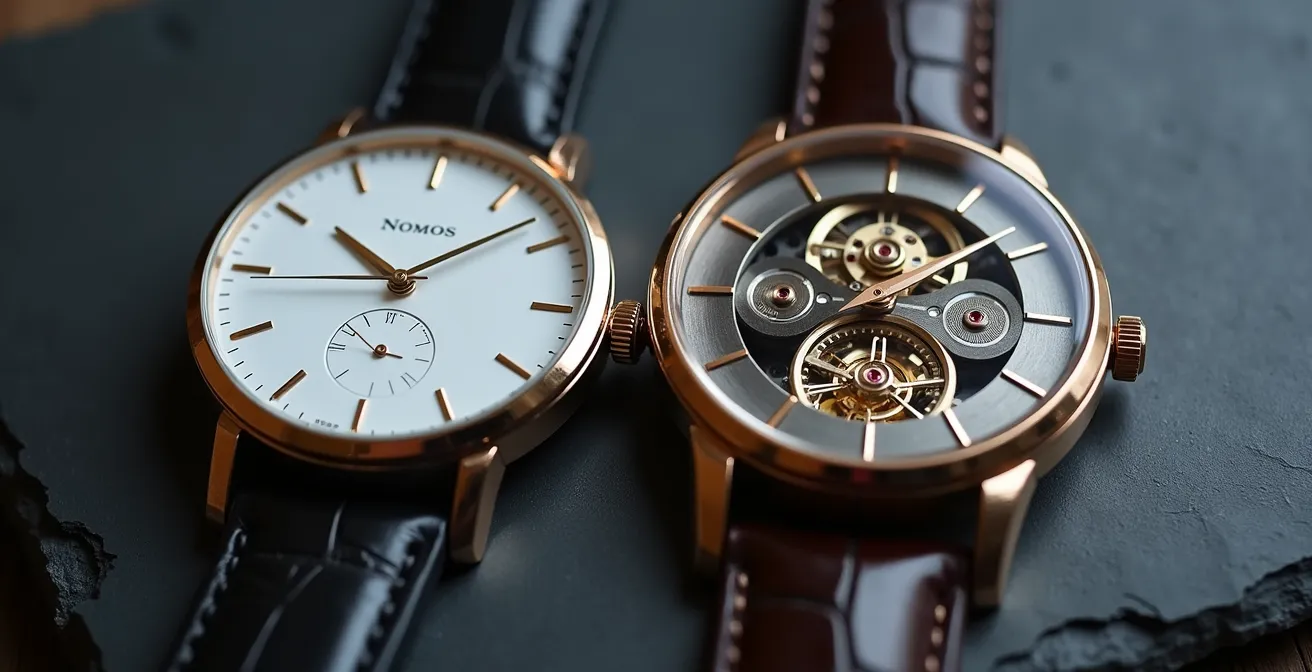
As you can see, one choice champions serene simplicity, while the other celebrates mechanical complexity. Choosing which to wear for a client meeting in Manchester’s Spinningfields district versus a creative workshop in the Northern Quarter is an act of strategic communication. It demonstrates your ability to read a room and present the right “face” for the occasion.
How to Change Watch Straps to Transform Your Look for an Evening Event?
One of the most overlooked yet powerful tools in an executive’s style arsenal is the watch strap. The ability to change a strap—what we call “horological code-switching”—allows you to adapt a single, high-quality timepiece to multiple social contexts, demonstrating versatility and an astute understanding of etiquette. A steel bracelet that is perfect for the boardroom can feel out of place at a black-tie gala. Mastering the quick change is a practical skill that multiplies the value of your collection.
The process is straightforward but requires precision to avoid damaging a valuable watch. The key is using the right tool and selecting the appropriate material for the event’s dress code. For formal British social occasions, the material is a critical signal. Alligator leather is the gold standard for black-tie, while a rich suede can be perfect for a sophisticated cocktail party. The goal is to match the texture and formality of your watch to the rest of your attire, creating a cohesive and intentional look.
Case Study: Bremont’s Versatile Strap System
British watchmaker Bremont exemplifies this modern approach to versatility. Their Supermarine collection demonstrates how one watch head can adapt to multiple British social settings: durable rubber straps are ideal for countryside weekends, a robust steel bracelet fits right in at City business meetings, and bespoke leather options sourced from artisans in London’s Burlington Arcade are perfect for formal dinners. This system allows a collector to maximise their investment while maintaining impeccable and appropriate style across a diverse range of social occasions, from casual to highly formal.
This adaptability is not just about following rules; it’s about showing you’ve considered every detail. It communicates a level of preparedness and sophistication that resonates in professional circles. Here are the essential steps:
- Step 1: Select the appropriate strap material based on the event’s formality – alligator leather for black-tie, suede for cocktail parties.
- Step 2: Use a proper spring bar tool to safely remove the existing bracelet without scratching the lugs of the watch case.
- Step 3: Match the new strap’s width precisely to the lug width of your watch (typically 18-22mm for dress watches).
- Step 4: Insert the new spring bars carefully, ensuring the strap is securely attached on both sides with an audible click.
- Step 5: Consider strap colour coordination with your evening wear – classic brown with a navy suit, and black with any formal attire.
Why Gifting a Signature Timepiece Is the Ultimate Coming-of-Age Tradition?
In a world of fleeting digital trends, the act of gifting a luxury watch as a coming-of-age or milestone marker has profound and lasting significance. It is a tradition that anchors an individual’s story in something tangible, permanent, and full of meaning. For a family, it represents the passing down of values—punctuality, longevity, and an appreciation for enduring quality. For the recipient, it is not just a gift but an anointing; the first piece in their own narrative portfolio and a foundational element of their adult personal brand.
The power of this tradition is particularly potent in the UK, where history and heritage are deeply valued. A watch can carry not just monetary but also immense sentimental value, becoming a vessel for family stories and a connection to previous generations. This is especially true for timepieces with a specific provenance, such as those with military history, which carry a dual narrative of personal and national heritage. These pieces are more than accessories; they are artifacts.
The June 2025 Bonhams auction featured a 1975 Rolex ‘MilSub’ Submariner previously owned by Royal Navy diver Russell Paxman, exemplifying how military timepieces become treasured family heirlooms. These watches carry both personal history and national heritage, making them particularly meaningful coming-of-age gifts in British families with service traditions.
Gifting a watch is an investment in someone’s future identity. It’s a statement of belief in their potential and a tool to help them navigate their professional life. When you gift a thoughtfully chosen timepiece, you are giving them their first chapter in a story of success and sophistication. It’s a market with significant personal investment, where studies show that on average, women plan to spend £7,000 while men estimate £6,500 on luxury watches in the UK, underscoring the importance placed on these milestone purchases. A watch becomes a daily reminder of a significant moment and the person who marked it.
How to Adopt the Green Dial Trend Without Dating Your Collection?
Colour trends in the watch world can be notoriously fickle, and for a strategist building a timeless collection, chasing fads is a cardinal sin. However, the recent and sustained rise of the green dial is different. It has evolved beyond a fleeting novelty into a sophisticated and versatile choice. The key to adopting this trend without dating your collection is to focus on nuance and timelessness over novelty. Avoid bright, lurid greens and instead opt for deeper, more classic shades that have historical resonance.
As luxury market analysts have noted, the trend is maturing. The focus is on shades that feel refined and permanent. Think less of fleeting fashion and more of enduring natural tones. The advice is to select from a palette of sophisticated colours: “Deep forest greens, petrol blues, burgundy reds, warm browns and muted pastels are replacing novelty shades with nuanced tones that feel refined rather than loud.” By choosing a shade with depth, such as olive or the iconic British Racing Green, you are not buying into a trend; you are investing in a new classic.
Case Study: The Timeless Appeal of British Racing Green
The sustained enthusiasm for green dials in 2025 shows particular strength in variants of British Racing Green. High-demand pieces like Rolex’s Datejust and Patek Philippe’s olive green Nautilus 5711/1A-014 demonstrate how this historically British colour maintains, and often appreciates, in value. These watches transcend trend cycles because their colour is tied to a rich heritage of motorsport and national identity. Their frequent association with limited production runs further boosts collector value, making them a savvy addition to a narrative portfolio that balances modern taste with classic, investment-grade appeal.
A sophisticated green dial offers surprising versatility. It pairs exceptionally well with the earthy tones often found in a British gentleman’s wardrobe—from tweed jackets to navy and brown suits. It can add a subtle, confident flash of colour that feels both contemporary and deeply rooted in tradition.
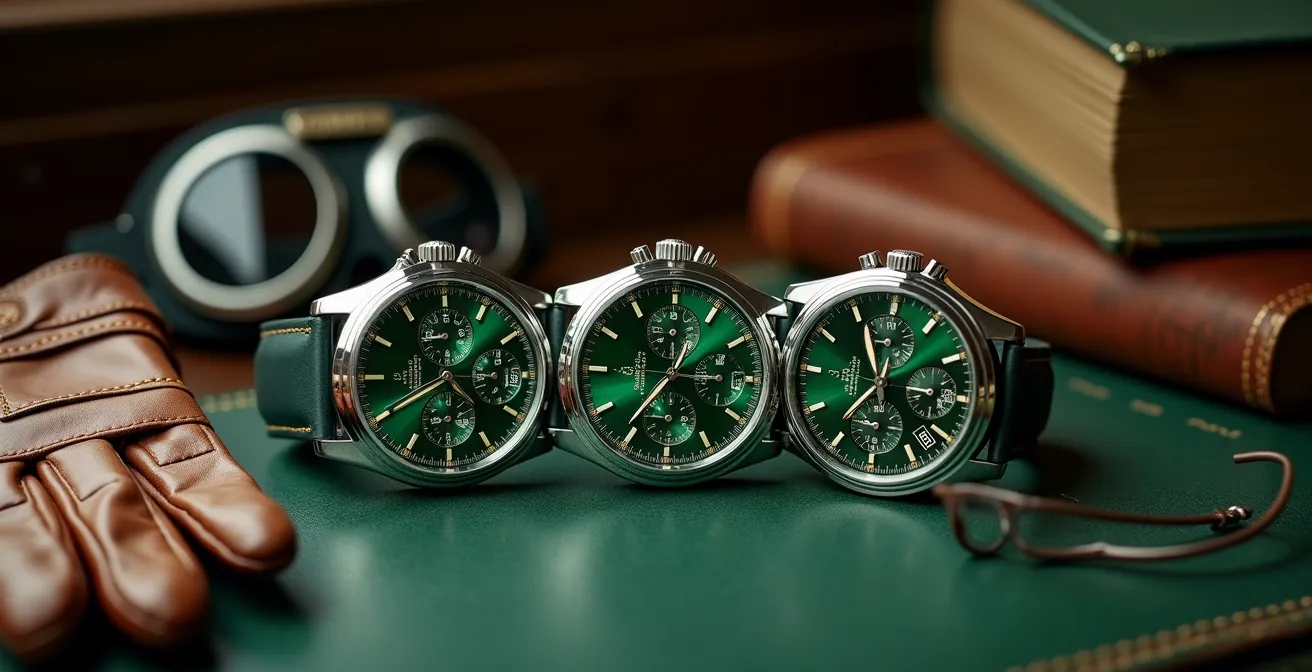
Choosing the right green is an act of foresight. It demonstrates an ability to discern a lasting shift from a temporary fad—a valuable trait for any executive. Your collection gains a piece that is current, yet immune to the rapid churn of fashion, strengthening your personal brand as someone with a keen, forward-thinking eye.
Which 3 Iconic Watch Shapes Changed the Face of Fashion History?
Beyond the dial and the strap, the very silhouette of a watch—its case shape—is a powerful component of its narrative. While the round watch is the traditional default, certain non-round shapes have become so iconic that they represent entire eras and attitudes. For a collection to be a true narrative portfolio, it must include an understanding of these foundational shapes. The UK watch market, which market analysis indicates is projected to reach USD 4.14 Billion by 2033, has been profoundly shaped by the cultural impact of these designs.
Integrating one of these iconic shapes into your collection is a deliberate nod to history and a signal of deep horological literacy. It shows you understand not just what a watch is, but what it has represented throughout modern history. Each shape carries its own story and aligns with a different facet of a personal brand. The key is to know which story you want to tell. The rectangular watch speaks of Art Deco elegance and aristocratic non-conformity. The classic round diver’s watch channels a spirit of adventure and rugged competence. The tonneau, or barrel shape, conveys a sense of creative rebellion and a break from tradition.
These three shapes, in particular, are not just designs; they are cultural milestones with a distinct British resonance. Understanding their impact is crucial for any UK-based executive aiming to build a collection with depth and meaning.
| Shape | Icon | British Cultural Movement | Legacy |
|---|---|---|---|
| Rectangular (Tank) | Princess Diana | Sloane Ranger Style | Defined 1980s British aristocratic fashion |
| Round (Submariner) | James Bond | Post-war British Masculinity | Naval heritage meets cinema glamour |
| Tonneau | Young British Artists | Cool Britannia Era | 1990s creative rebellion symbol |
Choosing to wear a rectangular watch to a gallery opening or a tonneau-shaped piece to a tech conference is an act of intentionality. It demonstrates that your understanding of style goes beyond the superficial, connecting your personal image to a broader cultural and historical context. It’s a subtle but powerful way to communicate sophistication.
Which Luxury Smartwatches Keep Your Health Data Stored Locally?
For the modern executive, the line between classic mechanical artistry and cutting-edge technology is increasingly blurred. The luxury smartwatch presents a compelling proposition: heritage branding with state-of-the-art functionality. However, for leaders in sensitive fields like finance, law, or technology, a significant concern arises: data privacy. The health and location data collected by these devices is highly personal, and in an era of heightened digital scrutiny, demonstrating control over one’s data is a new form of power dressing. Choosing a smartwatch that respects this is a critical signal of digital literacy.
Under the UK’s strict data protection laws, including the UK GDPR and the Data Protection Act 2018, manufacturers are obligated to be transparent about where user data is stored and processed. The default for many brands is cloud-based storage, often on servers located outside the UK. For a discerning professional, opting for a device that offers local storage is not just a preference; it’s a strategic choice. It communicates an understanding of digital sovereignty and a proactive stance on personal security—highly valued traits in any leadership role. This market segment has matured significantly since its inception, and the September 2024 milestone of the Apple Watch Series 10’s UK launch marked a full decade of smartwatch presence, pushing brands to differentiate on features like privacy.
Several luxury brands have recognised this demand from their high-net-worth clientele and now offer models that prioritise user control. These watches allow health and activity data to be stored directly on the device or a paired phone, never leaving the user’s immediate possession unless explicitly shared. This feature is particularly crucial for professionals in Manchester’s burgeoning tech and legal sectors, where client confidentiality and data integrity are paramount. By choosing such a device, you are making a clear statement: you value privacy, you understand technology, and you control your personal information. It’s a modern articulation of the classic executive values of discretion and authority.
Why Unusual Watch Shapes Are the Best Ice-Breakers at Networking Events?
At a high-level networking event, where everyone is dressed to impress, standing out requires subtlety and intelligence. A brightly coloured tie or a loud pocket square can seem unsophisticated. An unusual watch, however, is an entirely different class of signal. A non-traditional case shape—asymmetric, driver-style, or avant-garde—acts as a “peacock tail” for the intellectually curious. It’s a deliberate choice that invites conversation not about wealth, but about design, innovation, and personality. It’s the perfect ice-breaker because it assumes a shared level of taste and curiosity in the observer.
An unusual watch shape bypasses the typical brand-centric conversations (“Is that the new Rolex?”). Instead, it prompts a more engaging question: “That’s a fascinating design, what is it?” This immediately shifts the dialogue from one of status to one of story. It gives you the perfect opening to share the narrative of the piece, the philosophy of its independent maker, or why its unique design resonates with your own creative or professional approach. This is particularly effective in an environment where trends are also becoming more fluid, as noted by industry expert Stephens for Who What Wear, who observes that “women are gravitating towards larger cases… [while] men are showing a preference for smaller, more understated designs.” In this context, shape becomes a more stable and interesting differentiator than size.
To leverage this effectively, however, you must be prepared. The power of the ice-breaker is lost if you can’t articulate the story. Having a concise, compelling narrative is key. It’s not about reciting technical specifications, but about connecting the watch’s story to a broader theme of innovation, history, or artistry. This demonstrates passion and knowledge, qualities that are universally attractive in any professional setting.
Your Action Plan: Crafting a Networking Narrative for Your Watch
- Points of Contact: Identify key networking events (e.g., tech conferences in Manchester, gallery openings in London) where your watch’s story will have maximum impact.
- Collecte: Inventory your watch’s unique narrative. Does it have British heritage (e.g., Roger Smith)? Innovative design (e.g., MB&F)? A connection to a specific field like motorsport or aviation?
- Cohérence: Ensure the watch’s story aligns with the values of your personal brand. A watch from an innovative independent maker is perfect for a tech entrepreneur.
- Mémorabilité/émotion: Develop a single, intriguing fact to lead with. Instead of “It’s an independent brand,” try “The creator of this watch makes only ten pieces a year by hand.”
- Plan d’intégration: Rehearse a 30-second version that naturally leads to a question, engaging the other person in a real conversation, such as, “Are you interested in the modern British watchmaking renaissance?”
Key Takeaways
- A watch collection should be a “narrative portfolio,” with each piece selected to communicate a specific aspect of your personal brand.
- “Horological code-switching”—adapting your watch via straps or choice of model for different social codes—is a key executive skill.
- Timelessness trumps trends; choose classic shapes and nuanced colours like British Racing Green to ensure your collection’s longevity.
What Are the Unspoken Rules of Wearing a Dress Watch with a Tuxedo?
Navigating a black-tie event is the ultimate test of an executive’s understanding of social codes. Here, every detail is magnified, and the rules—though often unspoken—are strict. The most traditional and severe interpretation of black-tie etiquette dictates that one should not wear a watch at all, the logic being that a guest should be so engrossed in the event that time is of no concern. However, in the 21st century, this rule has softened. A watch is now acceptable, provided it is the *right* watch. Wearing the wrong one is a significant misstep, signalling a lack of sophistication.
The cardinal rule for a dress watch with a tuxedo is discretion. The watch should be an elegant, subtle companion to your attire, not the main event. This means it must be slim enough to slip effortlessly under the cuff of your shirt. Key characteristics include a simple, clean dial (time only or with small seconds), a case made of precious metal (yellow gold, white gold, or platinum are preferred), and a black leather strap (typically alligator). Complications like chronographs, dive bezels, or prominent date windows are strictly out of place. The goal is understatement and refined elegance.
Case Study: The Modern Formal Watch
The Rolex Perpetual 1908 in platinum with its ice-blue guilloché dial exemplifies the pinnacle of modern formal watch design. Its refined 39mm case and intricate “rice-grain” motif demonstrate how a contemporary dress watch can balance tradition with subtle, sophisticated detail. It is perfectly suited to London’s strictest black-tie standards, showcasing impeccable taste while completely avoiding ostentation. It is a watch that whispers, not shouts.
While the traditional rules are clear, modern interpretations of formal wear, such as “Creative Black Tie,” allow for slightly more latitude. In such contexts, a high-quality steel watch or one with a simple complication like an annual calendar may be acceptable. However, knowing which rules to bend requires a deep understanding of the original code. The following guidelines are essential for any British formal event:
| Event Type | Acceptable Case Size | Material | Complications |
|---|---|---|---|
| Traditional Black Tie | 36-39mm | Precious metal preferred | Time only or small seconds |
| Creative Black Tie | 38-41mm | Steel acceptable | Annual calendar permitted |
| White Tie | 35-38mm | Gold or platinum only | Ultra-thin, minimal |
Ultimately, a curated watch collection is your most personal and potent branding tool. By moving beyond simple acquisition and embracing a strategic, narrative-driven approach, you transform each timepiece into a deliberate statement of your values, taste, and authority. The next logical step is to audit your own collection not by its monetary value, but by the story it tells.
Frequently Asked Questions on Curating a Watch Collection
How does UK GDPR affect luxury smartwatch data storage?
Under UK GDPR and the Data Protection Act 2018, smartwatch manufacturers must clearly state where health data is stored and processed. Local storage options provide greater privacy control for UK residents.
Which luxury smartwatch brands offer local storage options?
Tag Heuer Connected and specific Garmin luxury series allow local data storage modes, complying with Information Commissioner’s Office guidelines for sensitive health information.
Why is local storage becoming important for UK professionals?
Industries like law, finance, and intelligence value privacy-first approaches. Choosing local storage demonstrates digital literacy and security awareness, important traits in these sectors.