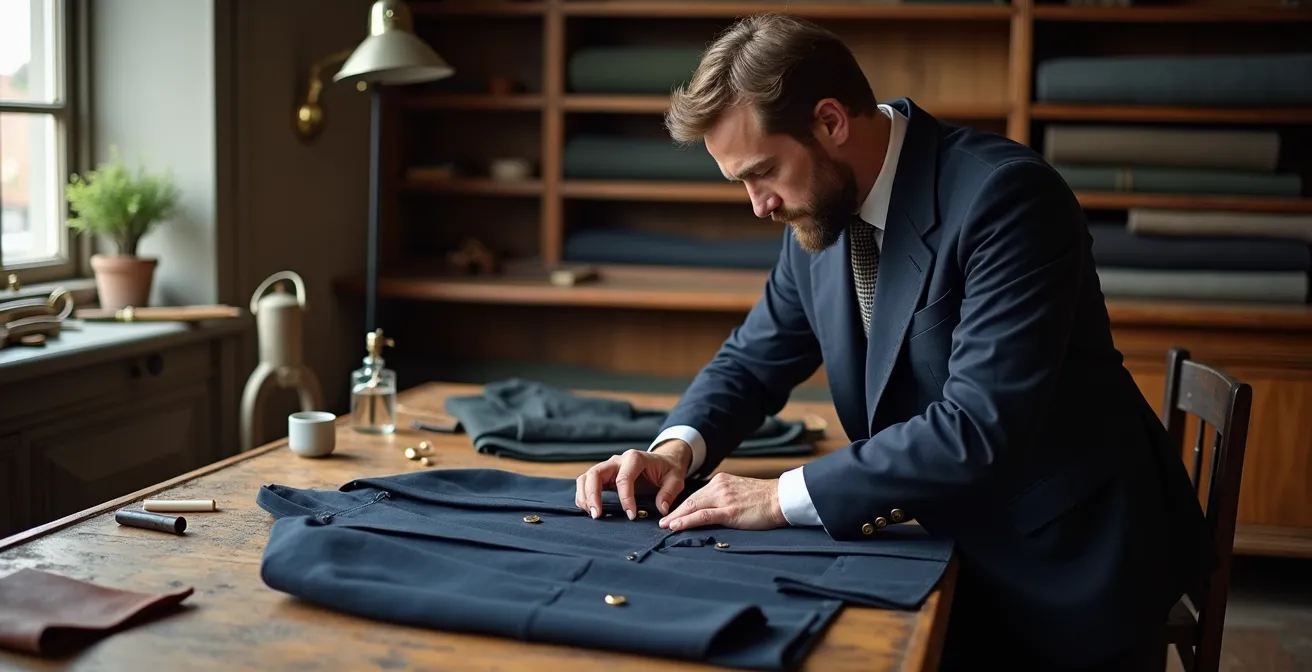
The luxury label on your suit is merely the paint; expert tailoring is the architectural foundation that gives it power and presence.
- A perfect fit is not about tightness but about structure, defined by the shoulder’s construction and the fabric’s drape.
- Strategic alterations do more than just adjust size; they can correct for postural habits and project authority.
Recommendation: Shift your budget from chasing the next brand to investing in a relationship with a skilled tailor. This is the difference between simply wearing expensive clothes and embodying true style.
You’ve done everything right. You’ve invested in reputable, high-end brands, followed the advice of style magazines, and curated a wardrobe that should, by all accounts, command respect. Yet, something is amiss. In the mirror, the reflection isn’t as sharp, as commanding, or as effortlessly elegant as you’d envisioned. The jacket collar gaps slightly, the shoulders seem a fraction too wide, and the overall silhouette lacks the crispness seen on style icons. This is a common frustration for many professionals: the disconnect between the price tag of a garment and the presence it projects.
The common advice is to “buy better quality,” but you’ve already done that. The prevailing wisdom suggests focusing on fabric or colour, but these are secondary concerns. The truth, known to artisans and the world’s best-dressed individuals, is that the brand is merely a starting point. The single most impactful investment you can make in your appearance is not in another luxury label, but in the unseen art of tailoring. It’s the difference between a garment hanging on your frame and one that is built for it.
But if the genuine key is not the logo but the line, how do we master it? This isn’t about simply hemming trousers. It’s about understanding the structural architecture of clothing. It’s about seeing how a correctly padded shoulder can improve your posture, how the ‘break’ of a trouser leg communicates a specific social code, and how a structured blazer can physically manifest a sense of authority. This is the work of a tailor: to act as an architect for your appearance, building a silhouette that is authentically and powerfully yours.
This guide will deconstruct the principles of a perfect fit, moving beyond generic advice to give you the specific knowledge to assess your own wardrobe and communicate effectively with a tailor. We will explore the foundational rules of jacket fit, the nuances of trouser length, the specific needs of professional women’s attire, and the profound connection between tailoring and posture. Welcome to the real secret of enduring style.
Summary: A Tailor’s Guide to Investing in Your Appearance
- How Much Should You Budget for Alterations When Buying Off-the-Rack?
- What Are the Shoulder and Sleeve Rules That Define a Perfect Jacket Fit?
- Full Break vs No Break: Which Trouser Length Is Right for Your Height?
- Why Structuring a Blazer Is Crucial for Female Authority in the Workplace?
- Can a Good Tailor Resize a Vintage Coat That Is Two Sizes Too Big?
- How to Stop Your Shoulders from Creeping Up to Your Ears During Stress?
- How to Ensure Your Dress Watch Slides Under a Double Cuff Shirt?
- Why Is Posture the Most Expensive Thing You Can Wear for Free?
How Much Should You Budget for Alterations When Buying Off-the-Rack?
Viewing alterations as an unforeseen cost is the first mistake. A skilled professional sees them as an integral, planned part of the garment’s acquisition cost. When you purchase an off-the-rack suit, you are buying a template, not a finished product. Factoring in a tailoring budget from the outset is the most critical step toward achieving a truly polished look. This mindset shifts tailoring from a “fix” for a problem to an “enhancement” that unlocks the garment’s full potential.
The cost of this enhancement varies significantly based on the complexity of the work and the artisan’s skill level. A simple hem adjustment at a high-street chain is a world away from restructuring the shoulders of a jacket at a specialist tailor. For a professional investing in quality brands, it’s wise to allocate a percentage of the garment’s cost—typically 15-25%—for standard alterations like waist suppression, sleeve length, and trouser hemming. More complex work, such as relining or significant reshaping, will naturally command a higher fee.
Understanding the landscape of tailoring services in the UK is key to making an informed investment. The options range from in-store services at department stores to independent local tailors and artisans on the periphery of legendary hubs like Savile Row. Each offers a different level of craftsmanship and, consequently, a different price point. As an analysis of UK tailoring costs shows, the difference can be substantial.
| Service Type | High Street (M&S/Next) | Local Tailor | Savile Row Adjacent |
|---|---|---|---|
| Hem Adjustment | £8-12 | £15-25 | £30-40 |
| Waist Adjustment | £15-20 | £25-35 | £45-60 |
| Sleeve Shortening | £10-15 | £20-30 | £35-50 |
| Jacket Relining | Not offered | £80-120 | £150+ |
For the discerning professional, the sweet spot often lies with a trusted local tailor. They offer a significant step up in quality and anatomical understanding from high-street services, providing the structural integrity that expensive garments deserve without the premium of a world-renowned Mayfair address. Building a relationship with such an artisan is one of the soundest investments in your personal brand.
What Are the Shoulder and Sleeve Rules That Define a Perfect Jacket Fit?
If the suit is the architecture of your appearance, the shoulders are its foundation. No other element has a greater impact on the overall silhouette. A poorly fitting shoulder—too wide, too narrow, or unnaturally padded—broadcasts an ill fit from across the room, negating the quality of the fabric or the prestige of the label. The goal is a shoulder line that ends precisely where your natural shoulder does. The seam should sit flat, creating a clean, uninterrupted line down the arm.
The sleeve head should fall smoothly from the shoulder without any buckling or pulling. In British tailoring, especially from the great Savile Row houses, this is an area of obsessive focus. The concept of the ‘English drape cut’, for example, is a masterclass in this principle. As detailed in a guide to Savile Row’s bespoke methods, legendary houses perfected a cut with a small, high armhole and subtle fullness in the sleeve head. This allows for exceptional freedom of movement while maintaining a sharp, clean line when the arm is at rest. It’s this invisible engineering that separates an adequate fit from an exceptional one.
This paragraph introduces the visual concept of a perfectly constructed shoulder. To better understand the details that define this structure, observe the image below, which highlights the precise craftsmanship involved.
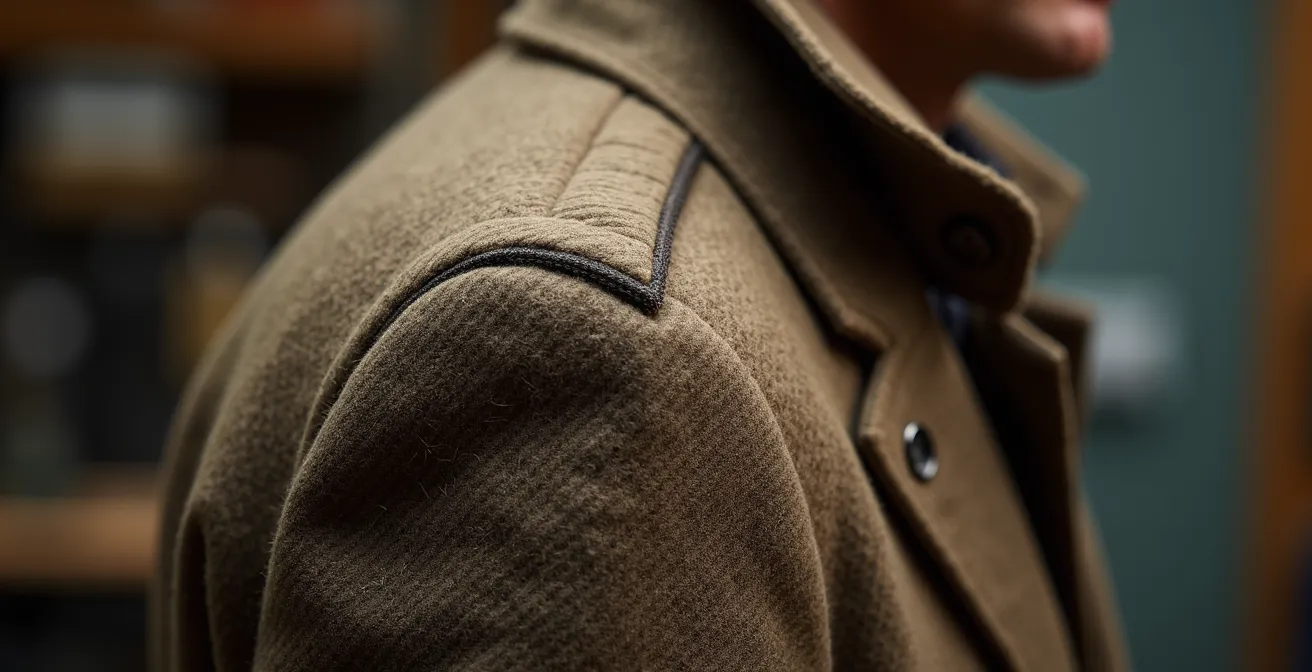
As the image reveals, the construction is about more than just a seam. It’s about the internal canvas and padding that provide shape and support. Regarding the sleeve, the rule is simple and absolute: with your arms hanging relaxed at your sides, the jacket sleeve should end to reveal approximately a quarter to a half-inch of the shirt cuff. This creates a pleasing visual break and frames the hands, drawing attention to a fine watch or cufflinks. Anything longer appears sloppy; anything shorter looks like you’ve outgrown your clothes.
Full Break vs No Break: Which Trouser Length Is Right for Your Height?
While the shoulder defines the jacket’s authority, the trouser break—the small horizontal fold of fabric created where the trouser meets the shoe—is a subtle but powerful signal of sartorial intent. The choice of break is not solely dictated by height, but by context, personal style, and even the type of shoe you wear. It’s a detail that, when correctly executed, demonstrates a deep understanding of clothing as a language.
There are three primary styles of break, each with its own connotations, particularly within the style geography of England:
- No Break: The trouser hem just skims the top of the shoe, creating a clean, sharp, and highly modern line with no fold. This style, popular in London’s creative and fashion-forward circles like Shoreditch, visually elongates the leg. It pairs best with sleek footwear, such as elegant Oxfords or Chelsea boots.
- Slight Break: This is the traditional and most versatile choice. A single, gentle fold rests on the front of the shoe. It is the preferred style in professional environments like the City of London, offering a look that is both classic and practical for navigating unpredictable British weather without soaking your hems.
- Full Break: Characterised by a deep, pronounced fold, this style is more traditional and often associated with a more relaxed, country-pursuits aesthetic. The added length and fabric weight pair well with substantial, heavy-soled footwear like classic British-made brogues from Northamptonshire shoemakers.
So, which is right for you? It’s less about height and more about the message you wish to convey. A taller individual can certainly wear a no-break trouser for a sharp, contemporary look, while a shorter person might opt for a slight break to maintain classic proportions. The key is consistency in your personal uniform. Your choice should align with your professional environment and the shoes you most often wear. The ultimate mistake is inconsistency—a sharp, no-break trouser worn with clunky, heavy shoes creates a visual dissonance that undermines the entire outfit.
Why Structuring a Blazer Is Crucial for Female Authority in the Workplace?
For women in professional settings, the blazer is more than just an item of clothing; it’s a piece of armour. However, many off-the-rack options fail to provide the intended sense of power. They are often cut from flimsy material with minimal internal construction, resulting in a garment that hangs limply rather than commands a room. A properly structured blazer, by contrast, uses tailoring techniques to build a silhouette that projects confidence and authority before a word is even spoken.
The secret lies in the internal canvas and shoulder construction. A well-made blazer has a defined shoulder—not necessarily a large, 80s-style pad, but a structured line that broadens the frame slightly and creates a powerful T-shape. This subtle emphasis on the shoulder line has a profound psychological effect, both on the wearer and the observer. It signals strength and stability. Furthermore, expert darting and seam work create shape through the waist, preventing the boxy, unflattering fit that plagues so many mass-market blazers.
This philosophy has been pioneered by a new generation of female-led tailoring houses on and around Savile Row. For example, a profile on the first women’s-only tailors to open on the famous street highlights their focus on creating ‘simple, elegant, feminine essentials’ that are built to last and empower. Their clients consistently report that a bespoke or properly altered blazer makes them feel like the ‘best, strongest, most confident version of themselves’. This isn’t just about looking good; it’s about feeling formidable. The structure of the garment provides a physical scaffolding for a confident posture and mindset.
When selecting a blazer, look for one with substance. Feel the fabric and the underlying construction. Does it have shape on the hanger? Does it create a clean line from shoulder to waist when you wear it? If not, it is a candidate for tailoring. A skilled tailor can add subtle padding, take in the waist, and adjust the posture of the jacket to transform it from a simple garment into a tool of professional authority.
Can a Good Tailor Resize a Vintage Coat That Is Two Sizes Too Big?
Discovering a beautifully made vintage coat, perhaps of heritage British fabrics like Harris Tweed or heavy wool, can feel like unearthing treasure. However, the excitement often fades when faced with a fit that is several sizes too large. The question then becomes: is it possible to salvage this piece through tailoring? The answer is a qualified yes, but it depends on several critical factors. It is a complex process, far more involved than simple alterations.
A good tailor can, in theory, deconstruct and reconstruct a garment. However, there are practical limits. The “two-size rule” is a common guideline among artisans: reducing a garment by more than two sizes (e.g., from a size 44 to a 40) is often unfeasible or prohibitively expensive. The primary constraint is the amount of available fabric. Major resizing requires the garment to be recut, and there simply may not be enough material to create the new, smaller panels, especially after accounting for seams.
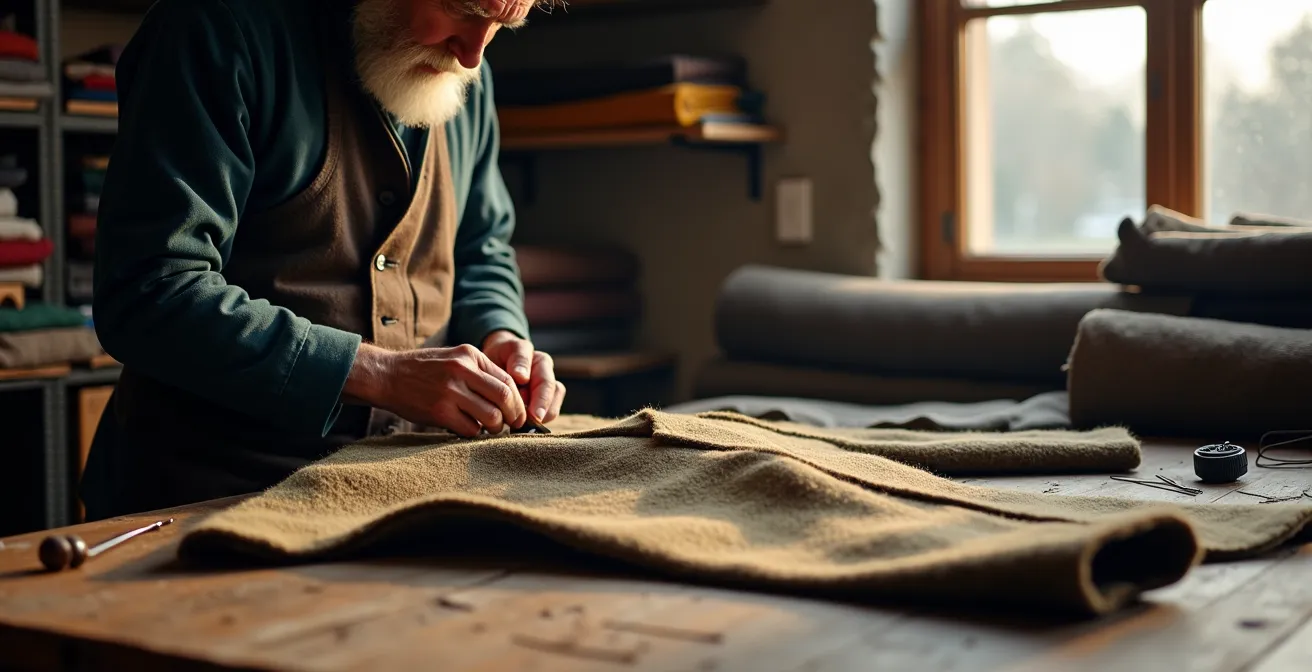
This image captures the delicate process of deconstructing a vintage garment, a necessary first step in any major resizing project.
The most challenging area is the shoulders. The shoulder width and armhole placement are fundamental to a coat’s structure. If these are drastically wrong for your frame, even the best tailor will struggle to achieve a natural-looking result. Before committing to a purchase, you should perform a feasibility check. It’s a task that requires careful consideration of the garment’s potential versus the cost and complexity of the work, where major work like a full relining, as noted in cost guides for UK alterations, can be a significant investment.
Your 5-Point Check Before Altering a Vintage Coat
- Assess Fabric Quality: Is the fabric worth the investment? Natural fibres like robust British wools and tweeds are excellent candidates as they have the integrity to withstand reconstruction.
- Examine Seam Allowances: Carefully inspect the inside of the coat. Older, high-quality garments often have generous seam allowances (extra fabric folded inside the seams), which a tailor can use for letting out or reshaping.
- Check Shoulder Placement: This is the deal-breaker. If the shoulder seams droop significantly down your arms, the cost and complexity of correcting them may outweigh the benefit.
- Respect the Two-Size Rule: Be realistic. If the coat is more than two sizes too big, the proportions—like pocket placement and lapel width—will be fundamentally wrong for your frame, even if the size is reduced.
- Calculate Cost vs. Value: Get a quote from a trusted tailor. Compare the significant cost of a full reconstruction against the price of a new or bespoke coat. Is the vintage piece special enough to justify the expense?
How to Stop Your Shoulders from Creeping Up to Your Ears During Stress?
Under pressure, the body has a physical response: muscles tense, the back hunches, and the shoulders creep upwards towards the ears. This defensive, closed-off posture not only communicates stress and a lack of confidence to others but also reinforces those feelings internally. While mindfulness and stretching can help, a well-constructed jacket can act as a surprising and effective physical corrective.
This is not about restriction, but about feedback. The internal construction of a high-quality tailored jacket—the layers of canvas, padding, and lining—provides a subtle weight and structure that you can feel. It acts as a gentle, constant reminder of your posture. When you start to hunch, the balance of the jacket shifts, providing a tactile cue to open your chest and drop your shoulders. It is a form of postural currency, where the garment itself encourages a more commanding physical presence.
British master tailors, particularly those trained in the traditions of Savile Row, are experts in this form of structural engineering. They often favour a defined shoulder and a clean silhouette that provides support. By strategically placing padding and canvas, they build a shape that encourages the wearer’s body to align with the jacket’s intended form. It is less about forcing a posture and more about making good posture the most comfortable and natural way to wear the garment.
The weight and balance of a canvassed jacket provides gentle, constant feedback to the wearer, encouraging them to maintain a more open and grounded posture.
– Savile Row Bespoke Academy
When you feel your shoulders tensing up during a difficult meeting, the physical presence of the jacket’s collar against your neck and the structure across your upper back can serve as an anchor. You can consciously press your shoulders down and back into the form of the jacket. This small physical adjustment can have an outsized impact on your mindset, helping you to feel more grounded, open, and in control, even when external pressures are high.
How to Ensure Your Dress Watch Slides Under a Double Cuff Shirt?
It is a small, yet telling detail. A gentleman reaches across a table, and his shirt cuff catches and bunches up on his watch. This small sartorial snag breaks the clean line of the arm and signals a lack of attention to the finer points of dressing. A truly well-thought-out wardrobe functions as a complete ecosystem, where every element works in harmony. A bespoke or properly altered shirt should accommodate your timepiece seamlessly.
The solution is a concept known among Jermyn Street shirtmakers as a ‘watch allowance’. During a fitting, this detail is specifically discussed. It is not a matter of simply making both cuffs wider, which would result in a sloppy fit on the non-watch wrist. Instead, it is a precise and asymmetric adjustment. The cuff on the watch-wearing wrist is made marginally larger—often by just a quarter to half an inch—to allow a dress watch to pass through smoothly without catching.
For a truly refined fit, particularly for those who favour a double cuff (or French cuff) shirt, consider these specifications when speaking with your shirtmaker:
- Request a ‘Watch Allowance’: Use the industry term to show you understand the specific need.
- Measure Both Wrists: Natural asymmetry is common. A good shirtmaker will measure each wrist independently.
- Specify Watch Thickness: A slim dress watch (typically under 10mm thick) requires a smaller allowance than a bulky sports watch. Communicate what you typically wear.
- Consider a Shaped ‘Watch Cuff’: For ultimate refinement, some tailors can create a subtly shaped cuff that is slightly larger on the side of the wrist where the watch face sits.
- Adjust Button Placement: On a single cuff, a slightly different button placement can provide the necessary room without compromising the overall fit.
This level of detail may seem excessive, but it is the hallmark of true personal style. It demonstrates a holistic approach to dressing, where the clothes are not just worn, but are integrated with the accessories and the life of the wearer. It is this final 5% of attention to detail that separates the well-dressed from the truly elegant.
Key takeaways
- Fit is not decoration; it is the fundamental architecture of your appearance, and the brand name is secondary to this structure.
- A perfect fit begins with the jacket’s shoulder, which must align with your natural frame to create a powerful, clean silhouette.
- Tailoring is a psychological tool; a structured garment can physically correct for stress-induced posture and project an aura of authority and confidence.
Why Is Posture the Most Expensive Thing You Can Wear for Free?
We have discussed the structural rules of tailoring, the financial investment, and the subtle codes of a perfect fit. Yet, all of these elements are in service of one ultimate goal: to enhance your physical presence. The most powerful and valuable asset you can wear is not a Savile Row suit or a Swiss watch, but excellent posture. It costs nothing to possess, yet it is priceless in its ability to communicate confidence, health, and authority. And while it may be ‘free’, it is the ultimate beneficiary of your investment in tailoring.
Think of your body as the mannequin. An expensive suit on a slumped, hunched mannequin will still look lifeless. The same suit on a frame that stands tall and open is instantly transformed. Tailoring acts as a bridge between the garment and your body. As an insight from the Savile Row Bespoke Academy explains, master tailors are trained to do more than just measure; they diagnose and correct for asymmetry. They use strategic darting, seam adjustments, and padding to build a structure that compensates for natural imbalances—like one shoulder sitting lower than the other—creating an illusion of perfect symmetry and balance.
This is the tailor’s greatest art: not just fitting the body you have, but presenting the best possible version of it. The garment becomes a ‘postural corrector’, encouraging you to stand taller and inhabit the powerful silhouette it creates. It is in this synergy that the true value of your investment is realised.
FIT is the most important aspect of style. Everything else about your suit does not matter — cost, fabric, designer, label, whether it’s custom-made, bespoke, or off-the-rack; if your suit does not fit you well, it will not look good.
– Tan France
Ultimately, the label inside your jacket is invisible to the world. What they see is the line of your shoulder, the confidence in your stance, and the clean silhouette you present. Good posture is the one element you control completely, and it is the canvas upon which the art of tailoring truly shines. Investing in fit is investing in a framework that elevates the free, yet most valuable, asset you own.
Now that you understand the principles, the next logical step is to apply them. Begin by assessing one key jacket in your wardrobe not by its brand, but by the rules of fit we have discussed. This is the first step toward transforming your appearance from expensive to truly exceptional.