
Contrary to the belief that makeup is the solution for skin imperfections, the most effective strategy is to treat the skin itself as a long-term medical investment, making concealment a choice rather than a daily necessity.
- Treating the root causes of issues like acne scars through targeted skincare yields cumulative, permanent improvements in skin health and texture.
- Covering up with makeup is a temporary aesthetic fix that can sometimes exacerbate underlying problems by trapping pollutants and bacteria.
Recommendation: Shift your focus from finding the perfect concealer to building a consistent, evidence-based skincare routine that repairs, protects, and regenerates your skin at a cellular level.
For anyone struggling with the daily frustration of concealing acne scars, the makeup counter often feels like the only destination. The cycle is familiar: searching for a higher-coverage foundation, mastering colour-correcting techniques, and hoping the finish lasts the day without looking heavy or cakey. This approach, focused entirely on camouflage, treats the skin as a flawed surface that must be hidden. It’s a strategy of temporary concealment, not long-term resolution. While makeup is a powerful tool for self-expression, relying on it to mask underlying skin health concerns can become a draining, and ultimately ineffective, battle.
The common advice to “just use better skincare” often feels vague and unhelpful. But what if we reframed the entire concept? From a dermatological perspective, the goal isn’t simply to have skin that ‘looks better’ under makeup. The goal is to fundamentally improve the health and function of the skin itself. This means viewing your skincare routine not as a cosmetic ritual, but as a clinical treatment plan designed to address the root physiological causes of your concerns. It is an investment in the biological fabric of your skin, which pays dividends in resilience, texture, and authentic radiance that no foundation can replicate.
This guide moves beyond the surface-level debate of skincare versus makeup. We will dissect the core pillars of a clinical approach to skin health, tailored to the specific environmental challenges of living in the UK. We will explore why robust protection is non-negotiable, which active ingredients deliver genuine cellular change, and how even the act of cleansing is a critical therapeutic step. Finally, through a series of analogies, we will redefine what ‘value’ truly means, encouraging a shift from concealing imperfections to celebrating the unique character of healthy, well-cared-for skin.
To navigate this in-depth exploration, the following sections will break down each critical component of a skin-first philosophy. Discover the science-backed strategies that empower you to build a foundation of true skin health, making makeup a creative choice, not a daily requirement.
Summary: Unveiling the True Value of Skincare Over Makeup
- Why Must You Wear SPF 50 Even on Cloudy British Days?
- Retinol vs Vitamin C: Which Ingredient Do You Actually Need?
- Why Is Washing Your Face Once Not Enough to Remove City Pollution?
- What Is the Difference Between Dehydrated and Dry Skin?
- Does ‘Beauty Sleep’ Actually Reduce Dark Circles?
- Which Luxury Smartwatches Keep Your Health Data Stored Locally?
- Why Is Merino Wool Superior to Acrylic for UK Winters?
- Why Are Coloured Gemstones Often Rarer Than Diamonds?
Why Must You Wear SPF 50 Even on Cloudy British Days?
The first principle of any effective skin treatment plan is defence. Before we can repair, we must prevent further damage. In the UK, a prevalent myth is that the near-constant cloud cover provides a natural shield against the sun. This is a dangerous misconception. Dermatologically speaking, what we cannot see can hurt us the most. The primary driver of skin ageing and cellular damage, Ultraviolet (UV) radiation, is not contingent on bright sunshine. Specifically, UVA rays, which are responsible for deep-tissue damage and collagen degradation, maintain a consistent intensity throughout the year, regardless of the weather.
Scientific evidence confirms the urgency of this. According to research cited by Cancer Research UK, over 90% of UV rays can penetrate cloud cover. This means that on a grey Tuesday in Manchester, your skin is still being exposed to the radiation that breaks down its structural integrity, worsens hyperpigmentation from acne scars, and increases long-term health risks. Even indoors, UVA rays can penetrate standard window glass, making daily protection a necessity, not an option reserved for holidays. During a seemingly cool British March, the UV Index can still reach levels high enough to cause significant photodamage.

Therefore, investing in a broad-spectrum SPF 50 is the single most effective anti-ageing and skin-health-preserving action one can take. It’s not a cosmetic step; it is a daily shield that protects the investment you make with other treatments. Without this foundational defence, any progress made by corrective serums or treatments is continuously undermined by new, invisible environmental damage. It is the non-negotiable first line in treating the skin as a vital organ.
Retinol vs Vitamin C: Which Ingredient Do You Actually Need?
Once the skin is adequately protected, the next phase of treatment involves active repair and regeneration. Two of the most clinically-proven ingredients in a dermatologist’s arsenal are Retinol and Vitamin C. However, they are not interchangeable. Understanding their distinct mechanisms is crucial for targeting specific concerns, especially acne scarring. Think of them as specialised tools: using the wrong one for the job will yield suboptimal results.
Retinol, a derivative of Vitamin A, is the gold standard for cellular repair and resurfacing. Its primary function is to accelerate cellular turnover. For skin with acne scars, this is critical. It encourages the shedding of old, damaged, and pigmented surface cells and promotes the generation of new, healthier cells, effectively smoothing texture and reducing the appearance of scars and fine lines over time. It is a powerful regenerative ingredient that must be used exclusively at night, as it can be destabilised by UV light and increase sun sensitivity. It’s important to note its potency is regulated; new EU regulations limit retinol concentration to a 0.3% maximum for face products, underscoring the need for careful, gradual introduction.
Vitamin C, on the other hand, is a powerful antioxidant. Its primary role is protective. Applied in the morning (underneath SPF), it acts as a secondary shield, neutralising free radicals generated by UV radiation and urban pollution. For UK city dwellers, this is particularly vital. It also plays a key role in brightening the complexion and inhibiting the enzyme responsible for hyperpigmentation, helping to fade the dark marks left by inflammation. It supports collagen synthesis but its main strength lies in its daytime defensive capabilities.
For a person with acne scars, the answer is often not ‘either/or’ but ‘both, used correctly’. Vitamin C in the morning protects against environmental aggressors that can darken scars, while Retinol at night works to actively repair and remodel the scarred tissue. The following table clarifies their distinct roles.
| Aspect | Retinol | Vitamin C |
|---|---|---|
| Best Time to Apply | Night only | Morning (under SPF) |
| Primary Benefits | Collagen production, cell turnover | Antioxidant protection, brightening |
| UK Climate Consideration | Helps repair winter barrier damage | Protects against urban pollution |
| Sensitivity Risk | High – requires gradual introduction | Low-moderate |
| Typical Concentration | 0.01-0.3% (new EU limits) | 10-20% |
Why Is Washing Your Face Once Not Enough to Remove City Pollution?
A clean canvas is essential for any treatment to be effective. However, in an urban environment like London, ‘clean’ has a different meaning. The air is saturated with microscopic pollutants, particularly PM2.5 particulates—tiny particles from exhaust fumes and industrial processes that are smaller than the width of a human hair. These particles don’t just sit on the skin’s surface; they adhere to the skin’s natural oils (sebum) and can penetrate pores, triggering inflammation, oxidative stress, and a breakdown of the skin’s protective barrier. This environmental assault can worsen acne and sensitivity, making effective cleansing a therapeutic necessity.
Data highlights the scale of the problem. For instance, 2023 data showing average PM2.5 levels of 10 µg/m³ at London roadsides is a stark reminder of the daily exposure. The health impact is significant, as underlined in a report from King’s College London.
London PM2.5 pollution contributes towards 3,500 premature deaths in London annually
– King’s College London, IQAir UK Air Quality Report
A single cleanse with a water-based wash is often insufficient to remove this complex mixture of makeup, sebum, and oil-soluble pollutants. The first cleanse, ideally with an oil or balm, is designed to dissolve these stubborn, oil-based impurities. The second cleanse, with a gentle water-based formula, then washes away any remaining residue and water-based debris like sweat and dirt. This two-step method, known as double cleansing, is not a luxury; it is a clinical necessity for preventing the long-term damage caused by urban grime.
Your Action Plan: The Urban Double-Cleanse Protocol
- Apply oil-based cleanser to dry skin to dissolve PM2.5 particles bound with sebum.
- Massage for 60 seconds, focusing on areas exposed to traffic pollution like the nose and chin.
- Rinse with lukewarm water; hard water in many UK areas can leave mineral deposits, so avoid extreme temperatures.
- Follow with a gentle, non-stripping water-based cleanser to remove any remaining impurities without disrupting the skin barrier.
- Pat the skin dry and immediately apply an antioxidant serum (like Vitamin C) to help neutralise any residual free radicals.
What Is the Difference Between Dehydrated and Dry Skin?
Correctly diagnosing your skin’s condition is paramount to treating it effectively. Many people, especially those with acne-prone skin, mistakenly believe their skin is ‘dry’ when it is actually ‘dehydrated’. The two are fundamentally different conditions requiring different solutions. Using heavy creams intended for dry skin on dehydrated, acne-prone skin can lead to clogged pores and more breakouts, a common frustration for those trying to manage scars.
Dry skin is a skin *type*. It is characterised by an insufficient production of natural oils, or lipids. The skin’s protective hydrolipidic barrier is compromised from within, leading to a feeling of roughness, scaling, and flakiness. This skin type genetically lacks the ‘mortar’ (lipids) that holds the skin cells together. Treatment must focus on replenishing these missing oils with ingredients like ceramides, squalane, and rich emollients.
Dehydrated skin, conversely, is a skin *condition*. It can affect any skin type, including oily and acne-prone skin. It is characterised by a lack of water, not oil. This condition is often caused by external factors common in the UK, such as central heating, air conditioning, and harsh weather, which increase Transepidermal Water Loss (TEWL). Dehydrated skin often feels tight and appears dull, showing fine, superficial lines. Crucially, it may still produce excess oil to compensate for the lack of water, leading to the confusing state of being both oily and ‘dry’ feeling. The treatment is to add water back into the skin with humectants like hyaluronic acid and glycerin.
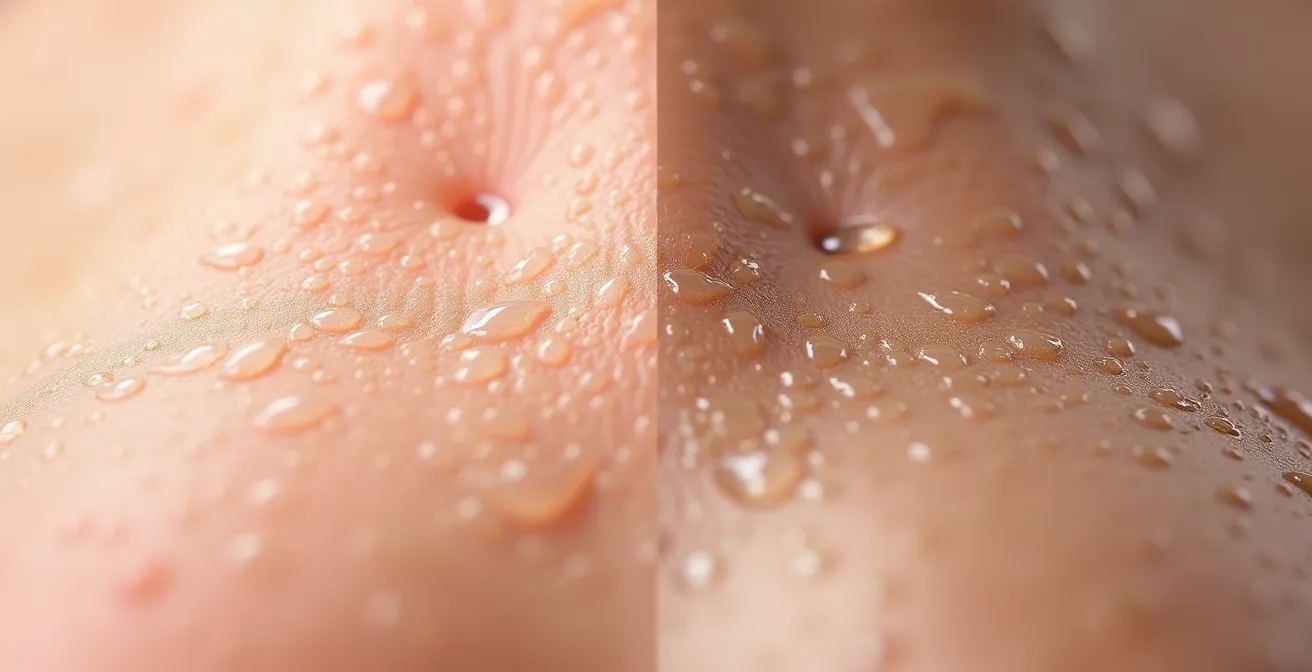
For someone with acne scars, this distinction is vital. Their skin is often dehydrated from harsh acne treatments. Applying heavy, oily products for ‘dry’ skin will only worsen the situation. Instead, focusing on lightweight, water-based hydration will restore balance, reduce tightness, and improve the skin’s overall function and appearance without causing congestion. Correct diagnosis is the cornerstone of an effective, non-comedogenic treatment plan.
Does ‘Beauty Sleep’ Actually Reduce Dark Circles?
The concept of ‘beauty sleep’ is often dismissed as a folk tale, but from a clinical standpoint, it is one of the most powerful regenerative processes for the skin. During deep sleep, the body’s repair mechanisms go into overdrive. This is not just about feeling rested; it is a critical period of physiological healing that directly impacts skin health and appearance, including the formation of dark circles.
When we are sleep-deprived, the body releases more of the stress hormone, cortisol. Elevated cortisol can lead to inflammation and the breakdown of collagen and hyaluronic acid, the molecules that keep skin plump and hydrated. Furthermore, lack of sleep impairs circulation. Blood vessels under the thin skin of the eye area can dilate and become more visible, and fluid can pool, causing puffiness and a dark, shadowed appearance. This is not just a sign of tiredness; it is a physiological symptom of impaired systemic function.
Conversely, quality sleep allows for optimal skin regeneration. Blood flow to the skin increases, allowing it to repair damage from the day’s exposure to UV rays and pollution. As one study highlights, even short periods of rest can initiate these benefits: a 20-minute session can reduce inflammation and support the skin barrier. The financial impact of poor sleep on a societal level is staggering, with research indicating the £3.7 billion annual economic cost of sleep deprivation in London alone, hinting at its pervasive effect on overall well-being and function. Investing in sleep hygiene—maintaining a consistent schedule, creating a dark and cool environment—is a direct investment in your skin’s ability to heal itself. It is a free, potent treatment that enhances the efficacy of every product you apply.
Key Takeaways
- Protection is Paramount: Daily, year-round SPF 50 is the most critical step to prevent the damage that undermines all other treatments, even on cloudy UK days.
- Treat with Precision: Use active ingredients for their specific purpose—Vitamin C for daytime antioxidant defence and Retinol for nighttime cellular repair and resurfacing.
- Cleanse Clinically: A double-cleanse is a non-negotiable step in urban environments to fully remove pore-clogging pollutants and prepare the skin for treatment.
Which Luxury Smartwatches Keep Your Health Data Stored Locally?
In recent years, our perception of value has shifted. We increasingly look beyond an object’s surface function to understand its deeper utility. Consider the luxury smartwatch. It is no longer merely a device for telling time; its true value lies in what it tracks beneath the surface—heart rate variability, sleep cycles, and stress levels. It is an investment in monitoring our internal health. This exact principle applies to skincare. Investing in high-quality skincare is not about achieving a temporary surface effect; it is about managing the long-term health of the skin from within.
Just as a smartwatch provides data on our body’s systemic health, a well-formulated skincare routine works on a biological level to improve the skin’s own ‘health metrics’. It improves the function of the hydrolipidic barrier, optimises cellular turnover, and fights oxidative stress. This approach aims for a fundamental state of health, which then naturally reflects on the surface. As one dermatologist aptly puts it, the ultimate goal is to remove the dependency on cosmetic camouflage.
The goal with skin care is to get your skin healthy enough that you do not need to wear a lot of makeup on a daily basis
– Dr. Heather D. Rogers, MD, Doctor Rogers Skin Care Blog
To achieve this, we can take inspiration from the data-driven approach of health tracking. While we may not have a dashboard for our skin, we can manage the inputs that influence its health, such as:
- Sleep Quality: Aiming for 7-9 hours to maximise the skin’s natural repair cycle.
- Hydration Levels: Ensuring adequate water intake for optimal cellular function.
- Stress Management: Utilising techniques to lower cortisol, which is known to degrade skin health.
- UV Exposure: Consciously reapplying SPF based on time spent outdoors.
Viewing skincare through this lens—as a tool to manage and improve the skin’s intrinsic health—is the most effective investment one can make. The resulting benefit, a reduced need for makeup, is a positive side effect of a truly healthy, functioning organ.
Why Is Merino Wool Superior to Acrylic for UK Winters?
The philosophy of working *with* the body’s natural systems, rather than against them, extends beyond skincare. Our choice of clothing, especially during the challenging UK winters, has a direct impact on skin health. The debate between natural fibres like Merino wool and synthetics like acrylic offers a powerful analogy for the skincare vs. makeup argument.
Acrylic fabrics are, in essence, a form of plastic. While they offer warmth, they are not breathable. They trap moisture and heat against the skin, creating a humid environment that is ideal for bacterial growth. For anyone prone to body acne or sensitivity, this can be a significant problem. It is the equivalent of applying a heavy, occlusive layer of makeup over unclean skin—it covers, but it can create or worsen problems underneath.
Merino wool, in contrast, works in harmony with the skin’s ecosystem. It is a highly intelligent, natural fibre. It is thermoregulating, meaning it helps maintain a stable skin temperature. Critically, it wicks moisture away from the skin, keeping the surface dry and discouraging bacterial proliferation. It supports the skin’s natural function. This is akin to using well-formulated skincare that reinforces the skin’s barrier and allows it to breathe and function optimally. As research suggests, winter is a key time for skin regeneration and building the hydrolipid barrier, a process supported by breathable, natural materials.
The direct impact on skin health is clear, as shown in the comparison below. Choosing fabrics that support the skin’s environment is an extension of a holistic, health-first approach.
| Property | Merino Wool | Acrylic |
|---|---|---|
| Moisture Management | Wicks moisture away naturally | Traps moisture against skin |
| Temperature Regulation | Maintains stable skin temperature | Can cause overheating |
| Bacterial Growth | Natural antibacterial properties | Promotes bacterial growth |
| Skin Irritation Risk | Low (if quality Merino) | High (synthetic friction) |
| Impact on Body Acne | Reduces risk | Increases risk |
Why Are Coloured Gemstones Often Rarer Than Diamonds?
The final and perhaps most profound shift in perspective comes from re-evaluating our definition of beauty and value. In the world of precious stones, diamonds are heavily marketed as the ultimate symbol of perfection—flawless, brilliant, and standardised. They are the equivalent of a perfectly applied, full-coverage makeup look that creates an image of uniform flawlessness.
However, in the world of gemology, many coloured gemstones, like emeralds, sapphires, or tourmalines, are significantly rarer than diamonds. Their value is often found not in their absence of flaws, but in the unique character of their ‘inclusions’—the natural imperfections within the stone that tell its geological story and create a one-of-a-kind beauty. This perspective offers a powerful metaphor for skin. A lifetime of covering acne scars is a pursuit of the ‘flawless diamond’ ideal. Investing in skin health is about embracing the ‘rare gemstone’—skin that is healthy, vibrant, and uniquely yours, with a history and character that is authentic, not concealed.

This brings us back to the core question of investment. What makes a high-end skincare product worth the price? It is not about a fancy bottle or a luxury brand name. As experts in cosmetic chemistry confirm, the value lies in the same principles that determine a gemstone’s quality: the calibre of its core components.
What makes a high-end skincare product actually worth it comes down to a few key things: Ingredient quality, formulation stability, delivery systems and clinical results. If a product contains medical-grade vitamin C, peptides or growth factors in clinically effective concentrations — not just for marketing — it’s worth the investment
– Melanie Abeyta, Kiplinger Personal Finance
Investing in this kind of formulation is an investment in genuine, lasting results. It is choosing to cultivate the health and unique character of your own skin, rather than simply purchasing the temporary illusion of perfection. It is choosing the rare, authentic gemstone over the common, flawless facade.
Ultimately, the journey from hiding to healing is a profound shift in self-care. It moves beyond the daily cycle of concealment and into the empowering realm of long-term health management. To truly invest in your skin, the next logical step is to build a consistent routine founded on the principles of clinical treatment, not cosmetic camouflage.
Frequently Asked Questions About Skincare Investment
How can I tell if my skin is dehydrated rather than dry?
Dehydrated skin lacks water and feels tight but may still be oily, showing fine lines that disappear when skin is stretched. It often looks dull and feels rough despite producing oil.
What causes dehydration in the UK climate?
Central heating in winter, air conditioning in offices, and the contrast between damp outdoor air and dry indoor environments all contribute to water loss from the skin.
Which ingredients should I use for each condition?
For dehydration, use hyaluronic acid and glycerin to attract water. For dry skin, use ceramides, squalane, and rich oils to replenish the lipid barrier.