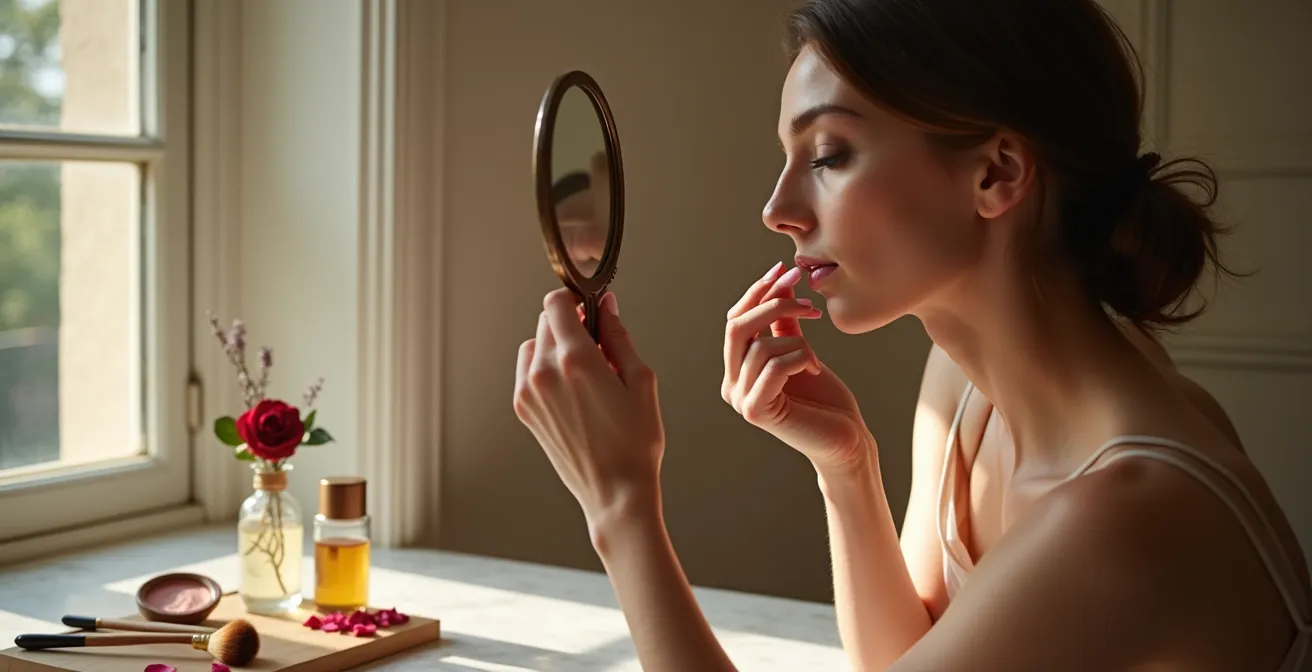
The secret to a professional ‘no-makeup’ look isn’t using fewer products—it’s mastering techniques of light manipulation and optical illusion used for high-definition cameras.
- Effective ‘no-makeup’ makeup focuses on creating the illusion of health and vitality, not just coverage.
- Longevity is achieved through meticulous skin preparation, not heavy setting powders.
Recommendation: Shift your focus from covering imperfections to enhancing your skin’s natural texture and your face’s structure for a truly imperceptible finish.
In the world of professional presentation, the goal is often to look polished, fresh, and effortlessly put-together. Yet, the term ‘no-makeup’ makeup is one of beauty’s greatest paradoxes. It suggests a bare-faced ideal while often involving a dozen products and complex techniques. The common advice—use a tinted moisturiser, a dab of concealer, a swipe of mascara—often falls short, leaving you looking either washed out or obviously ‘done up’ by midday. This approach fails to address the core challenge: creating a look that withstands the scrutiny of a full day, from morning meetings to after-work engagements, without revealing its artistry.
As a makeup artist who has prepped talent for the unforgiving lens of high-definition television, I can tell you the secret isn’t about minimalism. It’s about strategy. The true ‘woke up like this’ effect is an exercise in optical illusion. It’s about manipulating light, enhancing structure, and creating a finish so seamless it becomes one with the skin. It’s not about looking like you’re wearing no makeup; it’s about making it impossible to tell that you are. This philosophy moves beyond mere product application into the realm of enhancing reality itself, a skill crucial for any professional in any field.
This guide will deconstruct the techniques used for on-camera talent and adapt them for the professional workplace. We will explore how to choose products that disappear, apply them in a way that creates dimension, and ensure your look remains impeccable through the longest of shifts. Prepare to rethink everything you thought you knew about natural makeup.
To help you navigate these professional techniques, this article is structured to build your skills step-by-step. Below is a summary of the key areas we will cover to help you achieve that flawless, camera-ready finish for your everyday life.
Summary: A Professional’s Guide to Imperceptible Makeup
- How to Find a Foundation Shade That Disappears into Your Neck?
- Why Cream Blush Is the Secret to Youthful, Dewy Skin?
- How to Define Your Eyes Invisibly Without Thick Eyeliner?
- How to Find Your ‘Your Lips But Better’ Shade?
- How to Make Subtle Makeup Last Through a 10-Hour Shift?
- Which Neutral Colours Should Form the Base of Your Wardrobe Based on Skin Tone?
- Why Are Glasses the Most Impactful Accessory for Your Face?
- Why Is investing in Skincare More Effective Than Covering Up with Makeup?
How to Find a Foundation Shade That Disappears into Your Neck?
The foundation of any imperceptible makeup look is, quite literally, the foundation. If it’s even a fraction of a shade off, the entire illusion crumbles. The goal is not to ‘match’ your face, which can have redness or pigmentation, but to create a seamless transition from your jawline to your neck and chest. This ensures your face doesn’t look like a mask floating above your body—a common mistake that is instantly detectable, both in person and on camera. The process requires more precision than simply swiping a tester on your wrist. It’s about understanding how a formula interacts with your unique skin chemistry and how it looks in real-world lighting conditions, not the artificial glare of a shop.
Finding this perfect match is so critical that technology is racing to solve the problem. This isn’t just about aesthetics; it’s a booming segment, with research projecting a market value of USD 450 million by 2033 for shade finders. This highlights the universal demand for a flawless base. To achieve this, you must test shades directly on your jawline, blending slightly down your neck. The correct shade is the one that becomes invisible. Remember to wait a few minutes, as foundation can oxidize and darken as it dries and mixes with your skin’s oils.
The single most important step is to check the match in natural daylight. Step outside the store and look in a handheld mirror. What looks perfect under fluorescent lights can appear orange or ashy in the sun. For professionals, it’s also wise to have two shades on hand—a slightly lighter one for winter and a warmer one for summer—to accommodate subtle changes in skin tone throughout the year. When shopping online, many UK brands now offer advanced virtual try-on tools and sample kits to help you find your perfect shade from home.
Why Cream Blush Is the Secret to Youthful, Dewy Skin?
While powders have their place, for a ‘no-makeup’ look, cream blush is the undisputed champion. Unlike powder, which sits on top of the skin, a cream formula melts into it, creating a believable, healthy flush that appears to come from within. This is a core principle of on-camera makeup: you want to create the *effect* of vitality, not the *appearance* of a product. A cream blush mimics the natural texture of skin, imparting a subtle, dewy sheen that reflects light in the same way healthy, hydrated skin does. This act of light manipulation is what lends the complexion a youthful and fresh appearance, avoiding the flat, matte finish that can age the skin and look artificial up close.
The application is key to its success. Forget brushes that deposit colour too heavily. The best tools are your own fingertips. The warmth from your skin helps to emulsify the product, allowing for a truly seamless blend. Tap the colour onto the apples of your cheeks, then blend upwards and outwards towards your temples. This placement provides a gentle, natural-looking lift to the face. Some of the most effective products, like Charlotte Tilbury’s Hollywood Flawless Filter, are not even traditional blushes but can be used all over the face as a primer to create an underlying luminosity that looks like your skin, only better.
This technique is about building a sheer wash of colour, not depositing a stripe. The goal is a post-workout glow, not a statement cheek. The subtle dewiness it leaves behind enhances the overall effect of healthy, plump skin.
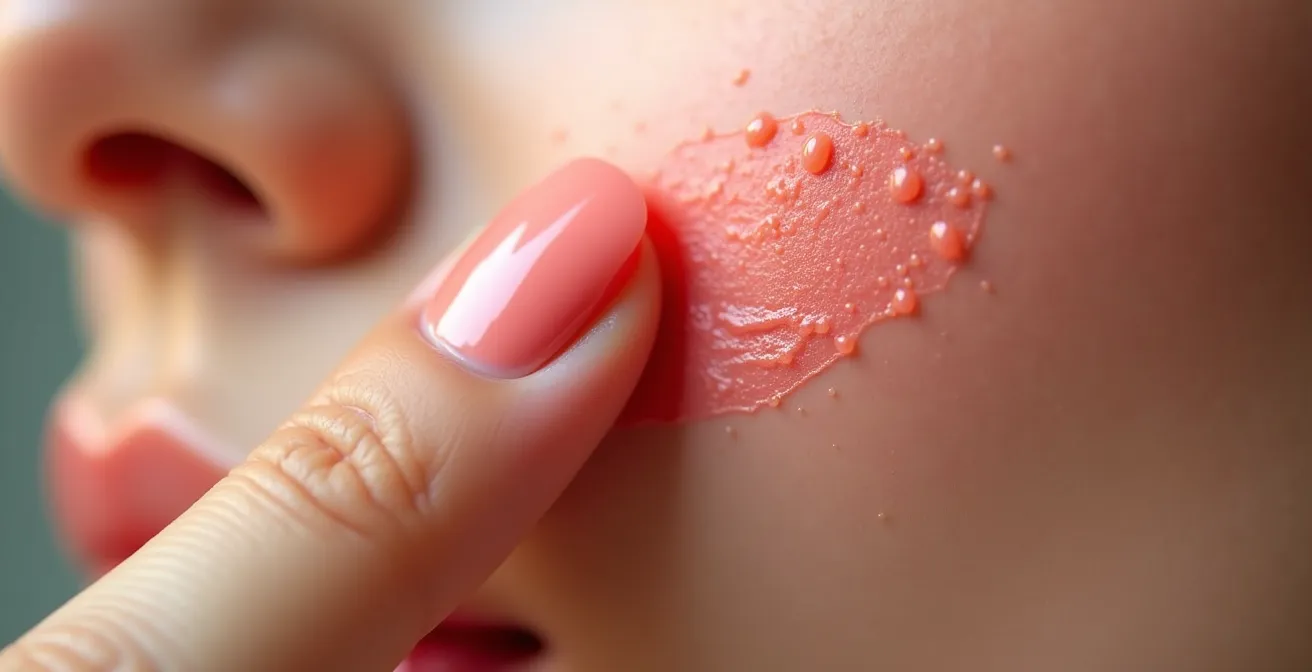
As you can see in this detailed view, the cream texture becomes one with the skin’s own natural texture. It doesn’t mask pores or fine lines; it co-exists with them, making the effect utterly convincing. This is the level of detail required for a look that holds up under close inspection in a professional setting.
How to Define Your Eyes Invisibly Without Thick Eyeliner?
A thick, sharp line of black eyeliner screams “makeup.” For a truly subtle look, the goal is to define the eyes and make lashes appear fuller without leaving any obvious trace of product. This is where the concept of invisible definition comes into play. It’s an optical illusion that adds depth and intensity to the lash line, making the eyes pop in a way that looks entirely natural. Thick liner can close up the eyes and look harsh, especially during the day in a professional environment. Instead, focus on techniques that enhance your eye shape from the root of the lashes.
One of the most effective professional techniques is tightlining. This involves applying a waterproof gel or pencil eyeliner not on the eyelid, but along the upper waterline—the thin strip of skin right underneath your top lashes. By filling in the gaps between the lashes, you create the appearance of a denser, darker lash base without a visible line. This small detail makes a significant difference, framing the eye with an intensity that appears to be part of you. As acclaimed UK makeup artist Lisa Eldridge advises, sometimes the simplest approach is best.
Give eyelashes a really good curl and opt for a defining mascara that looks natural. I like the DHC Perfect Pro Double Protection Mascara, £15.90.
– Lisa Eldridge, Grazia Daily UK
Choosing the right technique depends on the look you want to achieve and the time you have. A brown mascara can offer a softer definition than black, while a damp, angled brush dipped in dark brown eyeshadow can create a soft, smoky line that’s more forgiving than a sharp pencil.
To help you choose, this table breaks down the most effective techniques for invisible eye definition, as analysed by experts at publications like Maybelline UK.
| Technique | Best For | Product Type | Longevity |
|---|---|---|---|
| Tightlining | Invisible definition | Waterproof gel pencil | 8-10 hours |
| Shadow-Liner | Soft professional look | Dark eyeshadow + damp brush | 6-8 hours |
| Mascara-Only | Quick morning routine | Brown or clear mascara | All day |
How to Find Your ‘Your Lips But Better’ Shade?
The final touch in a ‘no-makeup’ look is the lip colour, and the guiding principle is ‘Your Lips But Better’ (YLBB). This isn’t about finding a generic nude, which can often wash you out. It’s about finding a shade that mimics and enhances the natural flush of your own lips, bringing life and polish to your face without drawing overt attention. The perfect YLBB shade should provide just enough colour to even out your lip tone and define their shape, creating a healthy, finished look. It’s the lip equivalent of a perfectly tailored neutral blazer—it pulls everything together without being the star of the show.
To find your shade, start by looking at your bare lips. The ideal YLBB colour will be one or two shades deeper than your natural lip tone. This slight increase in depth provides definition. The undertone is also critical. If your lips have a naturally cool, pink, or berry tone, look for shades in that family. If they are warmer, with peachy or brownish tones, stick to those. The goal is to find a colour that looks like it *could* be your natural lip colour on your best day. A phenomenal example of this is the Charlotte Tilbury ‘Pillow Talk’ lipstick, an iconic pink-nude that became a global bestseller precisely because it masterfully mimics the natural hue of many people’s lips, making it universally flattering.
For a professional setting, the formula is just as important as the colour. Opt for satin or cream finishes. They provide a subtle, hydrated look that is more forgiving and natural than a high-gloss or an ultra-matte finish. A matte lipstick can look severe and drying, while a high gloss can feel inappropriate for some corporate environments. The application technique also plays a role in the final effect. For the most natural finish, apply the lipstick directly to the centre of your lips and then use your fingertip to tap and blend the colour outwards. This creates a soft, diffused edge that looks more like a natural stain than a precisely applied lipstick.
How to Make Subtle Makeup Last Through a 10-Hour Shift?
The greatest challenge for any professional is not just applying makeup, but ensuring it looks just as fresh at 5 PM as it did at 8 AM. For a subtle ‘no-makeup’ look, which relies on thin layers and cream products, this is even more difficult. Heavy powders or thick setting sprays can ruin the ‘imperceptible’ effect by adding a visible, cakey texture. The secret to all-day longevity lies in two key areas: meticulous skin preparation and strategic, minimalist touch-ups. It’s what happens before makeup touches your skin and the few smart products you keep in your desk that make all the difference.
As leading UK makeup artist Florrie White notes, the groundwork is everything. Skin that is properly cleansed, hydrated, and primed will hold onto makeup far better than skin that is not.
It’s really important to invest time in your skincare. When I work on models and actresses, I spend longer prepping their skin than I do applying makeup. … If your skin is in its optimum state, the products go on so much better.
– Florrie White, Who What Wear UK
This means starting with a clean, moisturised canvas and using a primer targeted to your needs—a mattifying one for oily zones like the T-zone, and a hydrating one for drier areas. This ‘multi-priming’ technique creates the perfect base for makeup to adhere to. When applying foundation and concealer, use thin layers and press them into the skin with a damp sponge or your fingers. This sheers out the product and helps it meld with your skin for better wear.
Even with the best prep, a long day in a heated or air-conditioned office requires a touch-up strategy. The key is to be minimalist. Your desk drawer shouldn’t contain your entire makeup bag, just a few curated essentials to refresh your look without starting over.
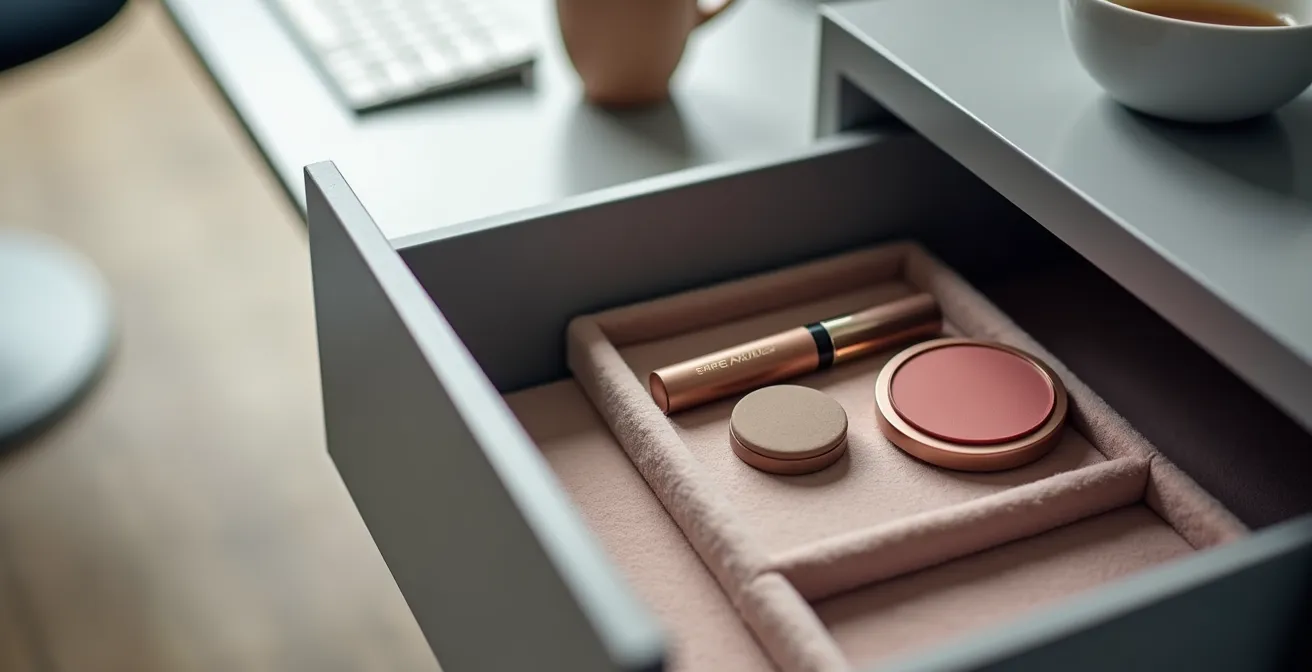
A well-organised desk drawer in a London office might contain just a concealer pen for under-eyes, a pressed powder compact for blotting shine on the T-zone, and the cream blush or lipstick used that morning. These three items are enough to revive your entire look in under two minutes, ensuring you remain polished and confident all day.
Which Neutral Colours Should Form the Base of Your Wardrobe Based on Skin Tone?
The ‘no-makeup’ makeup philosophy extends beyond your face. To create a truly cohesive and polished professional image, the colours you wear should harmonise with your skin’s natural undertones. When your clothing complements your complexion, you appear more vibrant and healthy, requiring even less makeup to look your best. Choosing the right neutrals for your wardrobe is as fundamental as choosing the right foundation shade. The wrong neutral—like a stark black on a warm-toned person or a camel-brown on a cool-toned person—can drain colour from your face, making you look tired and sallow.
Understanding your skin’s undertone is the first step. Look at the veins on the inside of your wrist. If they appear blue, you likely have cool undertones. If they look greenish, you have warm undertones. If you can’t really tell, you may have neutral undertones. This simple test unlocks the palette that will make you look most radiant. Cool-toned individuals shine in crisp neutrals like navy, charcoal grey, and pure white. Warm-toned individuals look best in earthy neutrals like camel, olive green, cream, and rich chocolate browns. Those with neutral undertones have the most flexibility and can wear most neutrals well.
This colour harmony directly impacts your makeup choices. When you’re wearing your best neutrals, your skin looks clearer and more even, so you can get away with less coverage. Furthermore, your makeup palette should align with this. A cool-toned person wearing a navy blazer will look stunning with a pink-based nude lip, while a warm-toned person in an olive trench coat will be perfectly complemented by a peachy nude lip. It’s a holistic approach to colour theory that creates an effortlessly chic and harmonious appearance.
This table, based on principles shared by style experts at publications like Who What Wear UK, provides a clear guide to building a neutral wardrobe that enhances your natural beauty.
| Undertone | Best Neutrals | Colours to Avoid | Makeup Palette |
|---|---|---|---|
| Cool | Navy, charcoal grey, pure white | Orange-browns, yellow-beiges | Pink-based nudes, berry tones |
| Warm | Camel, olive, cream | Stark black, icy pastels | Peachy nudes, golden browns |
| Neutral | Most colours work | Neon brights | Both pink and peach tones |
Why Are Glasses the Most Impactful Accessory for Your Face?
For many professionals, glasses are a daily necessity, but they shouldn’t be seen as an obstacle to makeup. In fact, they are the most impactful accessory you can wear. A well-chosen frame does more than correct vision; it acts as a powerful tool for structural definition, framing your eyes and adding character to your face. Just as you choose a handbag or a pair of shoes to complete an outfit, your glasses should be considered a key part of your overall professional image. They can convey intelligence, creativity, or authority, all while drawing attention to your most expressive feature: your eyes.
However, wearing glasses requires a few strategic makeup adjustments. The lenses themselves can alter how your eyes appear to others. Minus prescriptions, for nearsightedness, can make your eyes look smaller. To counteract this, you need to bring them forward. Applying a touch more mascara than you normally would and ensuring your lash line is subtly defined with tightlining can help your eyes appear larger and more prominent behind the lenses. Conversely, plus prescriptions for farsightedness can magnify your eyes, which also magnifies any makeup mistakes. For these lenses, precision is key. Use waterproof formulas to prevent smudging and be sure to blend eyeshadow impeccably.
Another common issue is makeup transferring onto the nose pads or the bridge of the frames. This can be prevented by using a long-wearing foundation and, crucially, setting the makeup on and around your nose with an extra dusting of translucent powder. A slightly brighter lip colour can also be a smart choice, as it helps to balance a strong or dark-coloured frame, ensuring your features don’t get lost. By making these small tweaks, your makeup and glasses will work together in harmony, not against each other.
Your Action Plan: Key Makeup Adjustments for Glasses Wearers
- Counteract Shrinking Lenses (Minus Prescription): Apply slightly more mascara and ensure the lash line is well-defined to make eyes appear larger.
- Manage Magnification (Plus Prescription): Use waterproof formulas to prevent smudging and set under-eye concealer with a fine powder to avoid creasing.
- Prevent Foundation Transfer: Choose a long-wearing foundation and pay special attention to setting the makeup on the bridge of your nose.
- Balance Strong Frames: Opt for a slightly brighter lip colour (a vibrant berry or a warm red) to create a focal point and balance the face.
- Secure the Nose Bridge: After applying foundation, press a small amount of translucent setting powder onto the sides of your nose where the pads sit.
Key Takeaways
- The most effective ‘no-makeup’ look relies on techniques of light manipulation and optical illusion, not just minimal product.
- Lasting power comes from meticulous skin preparation before makeup application, not heavy setting products after.
- Harmonising your makeup and wardrobe with your skin’s natural undertones creates a cohesive, polished, and effortless professional image.
Why Is investing in Skincare More Effective Than Covering Up with Makeup?
We’ve discussed techniques for creating an imperceptible finish, but the ultimate secret to a flawless ‘no-makeup’ look has little to do with makeup at all. It is the unwavering commitment to skincare. A healthy, hydrated, and even-toned complexion is the perfect canvas; when your skin is in its optimal state, you require significantly less product to achieve a polished look. Investing time and resources into a consistent skincare routine is far more effective in the long run than purchasing expensive concealers to cover up issues that could be managed at their source. This ‘skin-first’ philosophy is the true foundation of modern beauty.
Consumers are increasingly adopting this mindset. They are looking for authenticity and results, not just temporary fixes. This shift is backed by Mintel research showing that over 50% of beauty consumers now prioritise inclusivity and performance—which includes how products work with their skin—when making purchasing decisions. A great skincare routine is fundamentally inclusive; it’s about nurturing your specific skin type and concerns. This might mean gentle exfoliation to create a smooth surface, a vitamin C serum to brighten and even out tone, or a nourishing moisturiser to plump the skin and reduce the appearance of fine lines.
Perhaps the most critical, non-negotiable step in any skincare routine is daily sun protection. Sun damage is the primary cause of premature ageing, pigmentation, and uneven texture—all things we then try to cover with foundation. As Lisa Eldridge, one of the world’s most respected makeup artists, emphasizes, prevention is paramount.
There’s really no excuse not to use SPF daily — there are so many great products out there that offer high level protection and don’t leave skin white or ashy.
– Lisa Eldridge, Interview with Makeup.com
Ultimately, makeup can create a beautiful illusion of health, but skincare delivers the reality. When you focus on nurturing your skin, your makeup stops being a tool for correction and becomes purely a tool for enhancement. That is the final and most profound secret to looking like you just ‘woke up like this’.
To begin your journey toward a flawless, skin-first makeup routine, start by assessing your current skincare regimen and identifying where you can make small, consistent improvements.