Contrary to popular belief, the care label on your clothes isn’t a helpful guide; it’s a confession of quality, or a lack thereof.
- A “Dry Clean Only” tag on a simple viscose top is not a sign of luxury, but a warning of unstable dyes and poor fabric.
- The real cost of a jumper isn’t its price tag, but its lifespan. A £300 cashmere jumper can be cheaper than five £60 synthetic ones over five years.
Recommendation: Stop being a passive consumer and become a label investigator. This guide teaches you how to decode the clues hidden in plain sight to build a lasting, ethical wardrobe and finally stop buying plastic clothes.
You’ve felt the frustration. That new jumper, a bargain at the time, looks bobbly and misshapen after just a few washes. That stylish top, perfect for one night out, now looks faded and sad. You’re trapped in a cycle of buying, wearing, and discarding, your wardrobe full of clothes but with nothing of real value to wear. This is the calculated reality of fast fashion, an industry built on petroleum-based synthetics and engineered obsolescence. You’re told to look for “sustainable” options, but the greenwashing is so rampant that the term has become almost meaningless. You try to buy better, but how can you be sure you’re not just paying more for the same low-quality garment with a different tag?
The common advice is to “check the material” or “look at the stitching,” but this is surface-level guidance that fast fashion giants have already learned to game. They can make a polyester garment feel deceptively soft on the rack, and a seam can look neat until it’s put under the slightest strain. The real secret isn’t just looking at the garment; it’s learning to conduct label forensics. The truth is hidden in plain sight, on that small, often-ignored tag sewn into the seam. It contains everything you need to know about a garment’s true quality, its expected lifespan, and the ethics of its production.
But what if the key wasn’t just to read the label, but to interrogate it? This article reframes the label not as an instruction manual, but as a confession from the manufacturer. We will teach you how to spot “defensive labelling”—the warning signs that a brand knows its product won’t last. We will deconstruct the financial lie of cheap clothing and prove how investing in quality is the most economically sound decision. By the end of this guide, you will be equipped with the skills to look at any clothing label and see not just a set of symbols, but a clear verdict on whether you’re holding a long-term investment or future landfill.
This guide will walk you through the essential skills of a clothing investigator. We’ll start at the fibre level, move to the financial implications of your choices, decode the deceptive language of care labels, and finally, equip you to verify a brand’s ethical claims right here in the UK.
Summary: A Guide to Reading Clothing Labels Like an Expert
- Why Is Merino Wool Superior to Acrylic for UK Winters?
- Is a £300 Cashmere Jumper Cheaper Than Five £60 Synthetics?
- What Do Laundry Symbols Actually Mean for the Lifespan of Your Clothes?
- How to Verify if a ‘Sustainable’ Brand Pays Living Wages?
- Which 5 Apparel Items Are Worth Spending 50% of Your Budget On?
- How to Ensure Your Fine Gold Bars Are Not Conflict Minerals?
- Is Spending £1,500 on a Luxury Smartwatch Worth It If It Expires in 3 Years?
- Which Designer Handbags Are Better Investments Than the Stock Market?
Why Is Merino Wool Superior to Acrylic for UK Winters?
The first battleground in the war against disposable fashion is the fibre itself. When faced with a chilly, damp UK winter, the choice between a merino wool jumper and a cheap acrylic alternative seems purely economic. It’s not. It’s a choice between performance and plastic. Acrylic is a petroleum-based fibre; it’s essentially a wearable fossil fuel that offers insulation by trapping air but has almost zero breathability. This is why you often feel clammy and sweaty in cheap knitwear; the moisture has nowhere to go.
Merino wool, on the other hand, is a masterpiece of natural engineering. It’s a dynamic fibre that actively manages temperature and moisture. Fashion design expert Zoe Hong explains that merino wool can absorb up to 30% of its weight in moisture before it even begins to feel damp, wicking perspiration away from your skin to keep you dry and warm. This thermoregulation is something no synthetic can truly replicate. Furthermore, merino fibres are naturally elastic and crimped, which means they resist pilling and retain their shape far longer than the quickly-stretching, bobble-prone acrylic. Choosing merino isn’t just a luxury; it’s a practical investment in comfort and durability.
But how can you spot quality on the shop floor? Perform this quick, tactile test:
- Weight and Feel: Quality merino should feel substantial for its thickness, yet soft, not scratchy. Cheap wool or acrylic often feels light and brittle.
- Seam Inspection: Turn the garment inside out. Look for tight, even stitching, ideally with at least 14 stitches per inch. This indicates a well-constructed piece.
- Pilling Resistance: Gently rub a small, inconspicuous area of the fabric between your fingers. If fibres immediately start to bundle and ball up, it’s a clear sign of low-quality, shorter fibres that will pill excessively.
- Shape Retention: Gently stretch a small section, like a cuff. A quality wool garment should spring back to its original shape instantly. Acrylic will often look saggy or stretched.
- Label Verification: Finally, confirm the composition. Look for “100% Merino Wool” or a high-percentage blend with other noble fibres like silk or cashmere.
This simple 5-minute investigation moves you beyond the price tag to an informed assessment of the garment’s actual, long-term value. It’s your first step in becoming a more discerning and sustainable shopper.
Is a £300 Cashmere Jumper Cheaper Than Five £60 Synthetics?
The logic of fast fashion preys on our focus on initial outlay. A £60 price tag feels manageable, a smart buy. A £300 price tag feels like an extravagance. This is a deliberate psychological trap. To escape it, you must stop thinking like a consumer and start thinking like an investor, applying the principle of Total Cost of Ownership. The true cost of a garment isn’t what you pay at the till; it’s the initial price divided by the number of times you’ll wear it, minus its eventual resale value.
A high-quality cashmere jumper, properly cared for, can be worn hundreds of times over a decade or more. Its long, fine fibres are incredibly resilient, meaning it holds its shape, softness, and lustre. In contrast, the five synthetic jumpers you might buy for the same initial price are built for a handful of wears each before they pill, stretch, and fade. Their cost-per-wear skyrockets after a single season. This is the engineered obsolescence of fast fashion in action. The synthetic jumper isn’t cheap; it’s just a very expensive rental.
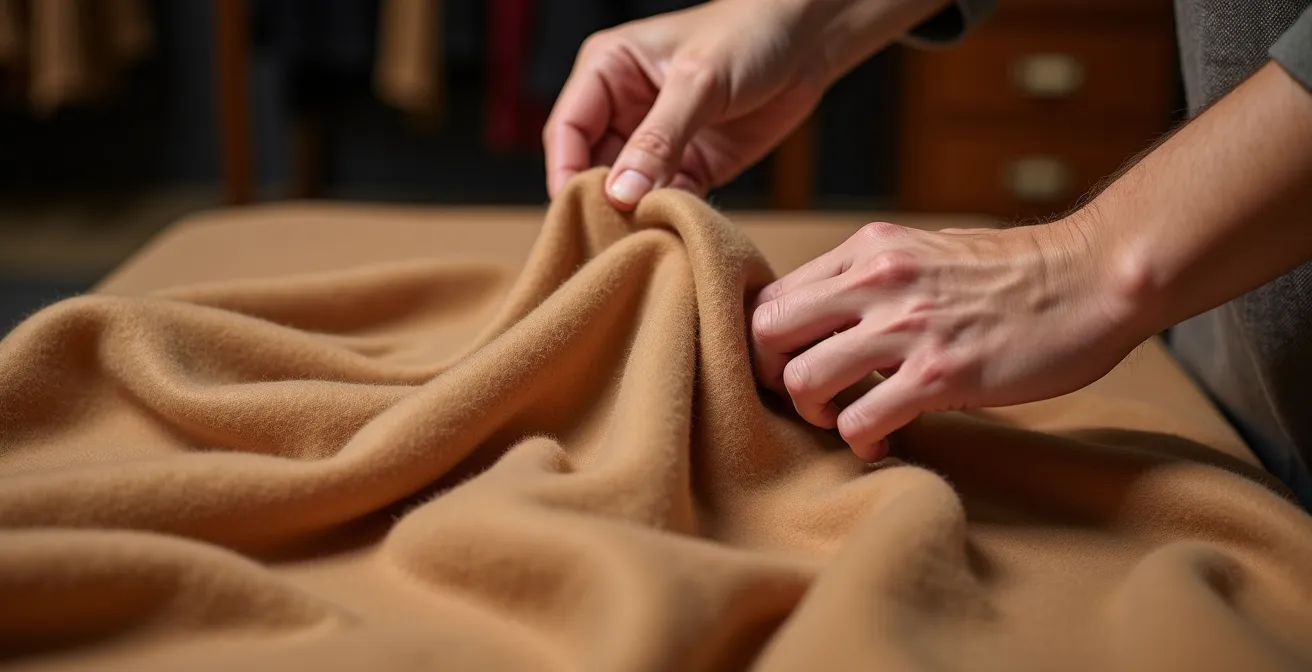
The image above demonstrates a crucial quality test: assessing the fabric’s density and resistance. High-quality cashmere will have a dense knit and a soft halo of fibres, but it won’t shed or feel loose. The real financial picture becomes clear when you account for the entire lifecycle of the garment, including what happens when you’re done with it. A well-maintained cashmere jumper retains significant value on the pre-owned market, whereas a used fast-fashion jumper has a resale value of zero. It is, quite literally, worthless.
This comparison from Yes Helping Hand starkly illustrates the long-term financial reality. It reframes the purchase from a simple spend to a calculated investment in your wardrobe. The ‘expensive’ option is, in fact, the more frugal one.
| Factor | £300 Cashmere Jumper | 5x £60 Synthetic Jumpers |
|---|---|---|
| Initial Cost | £300 | £300 |
| Cost Per Wear (100 wears) | £3.00 | £10-12 (based on 5 wears each) |
| Resale Value After 5 Years | £80-100 | £0 |
| Net Cost | £200-220 | £300 |
When you buy a quality piece, you are not just buying a garment; you are acquiring an asset whose cost depreciates slowly, or in some cases, can even appreciate. The synthetic alternative is a liability from day one.
What Do Laundry Symbols Actually Mean for the Lifespan of Your Clothes?
We are taught to view the care label as a helpful guide to keep our clothes looking their best. This is only half true. In the world of quality apparel, it is. But in fast fashion, the care label is often a legal disclaimer, a form of “defensive labelling” used by manufacturers who know their product is fundamentally unstable. Learning to spot these defensive instructions is a core skill in label forensics.
When you see a simple cotton t-shirt or a basic viscose top labelled “Hand Wash Only” or “Dry Clean Only,” it should be an immediate red flag. Why would a robust, everyday material require such delicate handling? The answer is that the material itself is not robust. It signifies that the manufacturer has used cheap, unstable dyes that will bleed in a machine wash, or that the fabric has not been properly finished (sanforized) and will shrink or twist dramatically if subjected to a normal laundry cycle. A brand confident in its quality, like Marks & Spencer, will test its garments rigorously and label a quality cotton shirt for a 40°C machine wash because they know it can withstand it.
Case Study: M&S vs. Fast Fashion Label Standards
Fashion expert Natalie Tincher highlights a telling difference in the UK market. Established retailers like M&S typically label their quality cotton shirts as ’40°C machine wash’. This is a result of rigorous in-house garment testing for shrinkage, colourfastness, and durability. In stark contrast, a visually similar shirt from a fast-fashion brand will often carry a defensive ‘Hand wash only’ or even ‘Dry clean only’ label. This isn’t a mark of delicacy; it’s a confession that the brand anticipates problems with unstable dyes and poor fabric stability, effectively shifting the blame for the garment’s inevitable degradation onto the consumer for improper care.
Your job as a clothing investigator is to look for these suspicious combinations that signal poor quality. Be sceptical of labels that seem overly restrictive for the garment’s material and intended use. These are not care instructions; they are warnings of a product’s inherent flaws.
A quality garment is designed for real-life use and a straightforward care routine. A disposable one is designed to self-destruct, and its label is the first clue to its planned failure.
How to Verify if a ‘Sustainable’ Brand Pays Living Wages?
Moving beyond the garment itself, the label can be a starting point for a deeper ethical investigation. The term “sustainable” is thrown around so freely that it’s become a greenwashing smokescreen. A truly sustainable brand must be transparent about its supply chain and, most importantly, its treatment of garment workers. But how can a conscious UK consumer verify these claims?
The first step is to look for legally required documentation. Thanks to the Modern Slavery Act, all UK companies with a turnover exceeding £36 million+ are required to publish an annual Modern Slavery Statement. This document, usually found in the footer of a brand’s website, details the steps they are taking to prevent forced labour in their supply chain. While its existence is just a starting point, its absence is a colossal red flag. However, as Ethical Consumer’s Alex Crumbie points out, geography is no guarantee of ethics.
The Leicester garment factory scandal shows that ‘Made in the UK’ doesn’t automatically equal ethical production
– Alex Crumbie, Ethical Consumer, September 2025
This sobering reminder proves that we must dig deeper than a simple “Made in…” tag. Vague platitudes about “ethical partners” are meaningless. Look for genuine transparency: third-party certifications like B Corp, which involves a rigorous and holistic audit of social and environmental performance, or detailed transparency reports that list specific factories and wage data. Organisations like Labour Behind the Label are also invaluable resources for checking a brand’s track record and any reported violations.
Your Action Plan: Researching Brand Ethics in 5 Steps
- Find the Statement: Check the brand’s website footer for their Modern Slavery Statement. In the UK, this is a legal requirement for larger companies. Is it easy to find and detailed?
- Demand Specifics: Scour their “sustainability” or “ethics” pages. Ignore vague promises like “ethical sourcing” and look for specific factory names, audit results, or partnerships with recognised labour organisations.
- Look for B Corp Certification: Search the B Corp directory for the brand. This certification is one of the most rigorous, covering governance, workers, community, and environment. It’s a strong sign of genuine commitment.
- Check for Controversies: Before buying, search for the brand’s name on the Labour Behind the Label website. They document worker rights violations and campaigns against unethical practices.
- Review Transparency Reports: The most transparent brands publish lists of their suppliers and, in some cases, detailed wage data. Look for a “Transparency Report” or “Supplier List” on their site.
True sustainability isn’t just about materials; it’s about people. By taking these steps, you use your power as a consumer to demand accountability and support a fashion industry that is fair as well as beautiful.
Which 5 Apparel Items Are Worth Spending 50% of Your Budget On?
Once you’ve adopted an investor’s mindset, the next logical step is to build a portfolio. Not of stocks, but of wardrobe staples. Instead of scattering your budget across dozens of fleeting trends, strategic allocation towards a core of high-quality, high-utility items will yield the greatest return in both style and savings. These are the workhorses of your wardrobe, the pieces that will form the foundation of countless outfits for years, even decades, to come.
The key is to identify items where the gap in quality and longevity between a cheap version and an investment piece is a chasm. A fast-fashion t-shirt might not be a disaster, but a cheap winter coat that fails in its second season is a waste of money and resources. The goal is to focus your significant spending on items defined by durable materials and classic construction, making them resistant to the whims of fashion cycles. Think of a waxed cotton coat, Goodyear-welted boots, a structured leather bag, raw selvedge denim, and a pure merino wool jumper.
Each of these items offers a vastly superior return on investment compared to its fast-fashion equivalent. Goodyear-welted boots can be resoled indefinitely. A waxed cotton coat can be reproofed for a lifetime of use. These aren’t just clothes; they are serviceable goods. The initial cost is higher, but the “cost per year” plummets over their lifespan, as demonstrated by data on long-term ownership.
The following table breaks down the stark financial difference between investing in quality and the false economy of constantly replacing cheap alternatives. This is your blueprint for building a core wardrobe that is both economically and environmentally sustainable.
| Investment Piece | Average Cost | Lifespan | Cost Per Year | Fast Fashion Alternative Cost/Year |
|---|---|---|---|---|
| Goodyear-Welted Boots | £400-600 | 10+ years (with resoles) | £40-60 | £150+ (3 pairs/year) |
| Waxed Cotton Coat | £300-500 | Lifetime (with rewaxing) | £15-25 | £80+ (new coat every 2 years) |
| Structured Leather Bag | £500-800 | 15+ years | £33-53 | £100+ (2 bags/year) |
| Raw Selvedge Denim | £150-250 | 5-7 years | £21-50 | £80+ (2 pairs/year) |
| Merino Wool Jumper | £150-250 | 8-10 years | £15-31 | £60+ (3 jumpers/year) |
This strategy transforms your relationship with your clothes. You move from being a passive trend-follower to a curator of a personal, valuable, and enduring collection.
How to Ensure Your Fine Gold Bars Are Not Conflict Minerals?
The investment mindset extends beyond textiles to the accessories that complete a curated wardrobe, particularly precious metals. Just as a “Made in UK” label doesn’t guarantee ethical labour, a simple gold stamp doesn’t guarantee the metal is free from conflict, human rights abuses, or environmental devastation. For the conscious investor, ensuring the provenance of gold is as critical as verifying a brand’s supply chain.
In the United Kingdom, the first layer of assurance comes from hallmarking. Any item sold as gold, silver, platinum, or palladium must be tested and stamped by one of the 4 UK Assay Offices in London, Birmingham, Sheffield, or Edinburgh. A hallmark guarantees the purity of the metal, but it does not certify its origin or ethical status. This is where your investigation must go deeper, seeking out jewellers who offer transparently sourced and certified options.
Discerning buyers should look for specific certifications that provide traceability and ensure fair practices at the mining level. These certifications are the “ethical labels” of the jewellery world, offering a level of assurance that goes far beyond a simple hallmark. They represent a commitment to responsible sourcing that mirrors the values of investing in a sustainable wardrobe.
Case Study: Fairtrade vs. Fairmined Gold Standards
Leading UK ethical jewellers like Lebrusan Studio and Harriet Kelsall provide clear choices for consumers. They often offer gold certified under different, but equally important, schemes. Fairtrade Gold ensures that artisanal and small-scale miners receive a fair minimum price and a premium to invest in their communities. Fairmined Gold provides a similar guarantee but also includes strict standards for responsible mining practices, including environmental protection and worker safety. For the highest level of assurance, some jewellers offer Single Mine Origin (SMO) gold, which provides complete traceability back to one specific mine that meets rigorous social and environmental standards.
By asking for and prioritising these certifications, you are not only acquiring a piece of lasting value but also casting a vote for a more transparent and equitable jewellery industry.
Is Spending £1,500 on a Luxury Smartwatch Worth It If It Expires in 3 Years?
The concept of “luxury” has been co-opted by technology, creating a new category of products that command high prices but are built with engineered obsolescence at their core. The luxury smartwatch is the perfect case study. It wraps a disposable electronic product in a premium casing, tricking us into thinking we’re making a long-term investment when we are, in fact, buying a very expensive piece of future e-waste.
A traditional mechanical watch, especially from a reputable Swiss or Japanese maker, is a true investment. It is a piece of micro-engineering designed to last for generations. It can be serviced, repaired, and its value can hold steady or even appreciate over time. It is a tangible asset. A smartwatch, no matter how “luxurious” its brand or materials, is fundamentally tied to its internal battery and software. Within a few years, its battery will degrade, and its software will no longer be supported. It will cease to function, and its value will plummet to near zero.
This is the ultimate fast fashion trap, applied to a high-ticket item. You are paying a premium for a brand name attached to a product with a deliberately short lifespan. The comparison between the depreciation of a luxury smartwatch and a pre-owned mechanical watch of the same initial price is devastatingly clear.
The following table starkly illustrates the financial trap of tech-luxury. One item is an asset that holds its value, the other is a rapidly depreciating gadget designed to be replaced.
| Watch Type | Initial Cost | Value After 3 Years | Depreciation | Status After 5 Years |
|---|---|---|---|---|
| TAG Heuer Connected (Smart) | £1,500 | £200-300 | 80-87% | Obsolete/E-waste |
| Pre-owned Omega Seamaster | £1,500 | £1,400-1,600 | -7% to +7% | Still functioning, potentially appreciating |
Before making any significant purchase, ask yourself the most important question: “Can this be repaired in ten years’ time?” If the answer is no, it’s not a luxury item; it’s a disposable one in a fancy dress.
To keep in mind
- The care label is not your friend; it’s a confession. “Hand Wash Only” on a basic cotton item is a red flag for poor quality.
- True cost is not the price tag. Calculate the “cost-per-wear” to see that a £300 quality jumper is cheaper than five £60 disposable ones.
- Look for external validation. Certifications like B Corp or Fairtrade Gold are far more meaningful than a brand’s own “sustainable” marketing claims.
Which Designer Handbags Are Better Investments Than the Stock Market?
The final evolution of the investment dressing mindset is to view certain key pieces not just as durable goods, but as a genuine asset class. While the fashion industry as a whole is a major polluter, responsible for a staggering 10% of all global carbon emissions according to the World Economic Forum, choosing items that appreciate in value is the ultimate act of sustainable consumption. In this elite category, a few designer handbags stand alone, having demonstrated returns that can outperform traditional investments like stocks or gold.
This phenomenon is not about fashion trends; it’s about scarcity, iconic design, and impeccable craftsmanship. Brands like Hermès, Chanel, and certain models from Louis Vuitton operate on a model that is the polar opposite of fast fashion. They strictly control supply, use the finest materials, and employ artisans whose skills are passed down through generations. An Hermès Birkin or Kelly bag is not something you can simply buy off the shelf; there are long waiting lists, creating a feverish secondary market where pre-owned bags often sell for far more than their original retail price.
The key to identifying an investment-grade handbag lies in three factors: the brand’s legacy and control over supply, the icon status of the specific model (think Chanel 2.55 or Lady Dior), and the quality of the materials and construction. These are not trendy “it bags” that are popular for a season and then disappear. They are timeless designs that have been in production for decades. Their value is rooted in a long history of desirability and a proven track record of holding or increasing their worth over time.
For a conscious consumer, acquiring such a piece is a profound statement. It is the ultimate rejection of the throwaway culture, an investment in an item that will not only last a lifetime but can be passed down as a valuable heirloom. It represents the pinnacle of buying less but buying the absolute best—an asset that you can also happen to wear.
By applying this forensic, investor-led approach to every potential purchase, you can systematically build a wardrobe of immense personal and financial value, escaping the fast-fashion cycle for good.