Fashion & Beauty
Fashion and beauty are far more than fleeting trends or superficial concerns. They represent a visual language through which we communicate our values, our attention to detail, and our respect for ourselves and others. Whether you’re selecting a timepiece that speaks to your personality, building a wardrobe that truly serves your lifestyle, or establishing a grooming routine that enhances your natural features, every choice contributes to a cohesive personal presentation that feels authentically you.
This comprehensive resource explores the foundational principles that underpin true style and elegance. From understanding fabric quality and the nuances of fit, to mastering the art of strategic accessorising and building a skincare routine that creates the perfect canvas, we’ll examine the interconnected elements that transform everyday presentation into something genuinely refined. The goal isn’t to follow rules rigidly, but to understand the principles well enough to make informed choices that align with your individual context and aspirations.
Timepieces and Jewellery: The Foundation of Personal Style
A carefully chosen watch does far more than tell the time—it serves as a cornerstone of your personal brand and a subtle indicator of your aesthetic sensibilities. The relationship between a timepiece and your overall presentation hinges on several interconnected factors that deserve thoughtful consideration.
Metal tone selection creates visual harmony across your entire look. Whether you gravitate towards the warmth of rose gold, the versatility of stainless steel, or the classic elegance of yellow gold, consistency in metal tones (or deliberate, confident mixing) establishes visual coherence. The modern approach to mixing metals has evolved considerably, with many style-conscious individuals successfully combining gold and silver pieces, provided the overall balance feels intentional rather than accidental.
Case thickness matters more than many realise, particularly when considering cuff compatibility. A watch that slides comfortably beneath a shirt cuff without creating bulk demonstrates attention to the practical realities of daily wear. For those building a versatile collection, one slimmer dress watch and one more substantial casual piece typically addresses the full spectrum of occasions.
Beyond watches, jewellery selection requires understanding your unique features. Earring selection based on face shape can create balance—elongated drops for round faces, studs or small hoops for longer face shapes. Necklace layering has become an art form, with successful combinations typically varying in length by at least 5 centimetres to avoid tangling and create distinct visual layers. The key is ensuring each piece has breathing room whilst contributing to a cohesive whole.
Building a Wardrobe That Works: Quality Over Quantity
The foundation of a truly functional wardrobe isn’t quantity, but rather a carefully curated selection of pieces that prioritise quality and fit above all else. This approach, sometimes articulated as the 70/30 rule, suggests that roughly 70% of your wardrobe should consist of timeless, versatile pieces, whilst 30% can accommodate trend-led items that inject personality and freshness.
Understanding fabric quality indicators empowers you to make investment decisions with confidence. Look for these telling signs:
- Tightly woven fabrics with consistent texture and no visible gaps between threads
- Natural fibres (cotton, wool, silk, linen) that breathe and age gracefully
- Finished seams and hems with no loose threads or puckering
- Buttons that feel substantial and are securely attached with a shank
- Linings in structured garments that allow ease of movement
Colour analysis application offers another powerful tool for wardrobe coherence. Understanding whether you’re enhanced by warm or cool tones, and which levels of contrast suit your natural colouring, allows you to build a wardrobe where pieces naturally work together. This doesn’t mean wearing only “your colours,” but rather using this knowledge as a foundation whilst allowing room for pieces you genuinely love.
Material integrity extends beyond aesthetics into ethics. Increasingly, consumers are considering the provenance of their garments, seeking pieces produced under fair labour conditions and with minimal environmental impact. This consciousness doesn’t require perfection, but rather a gradual shift towards supporting brands and makers whose values align with your own.
The Art of Tailoring and Perfect Fit
The difference between a good garment and an exceptional one often comes down to fit. British tailoring tradition, exemplified by establishments on Savile Row, has long understood that bespoke and made-to-measure construction creates garments that move with the body rather than against it.
For most people, off-the-rack purchases combined with skilled alterations offer a practical middle ground. Understanding key fit points allows you to assess which pieces are worth the investment in adjustment:
- Shoulders should sit at your natural shoulder point—this is the most difficult and expensive alteration
- Sleeve length should allow roughly 1cm of shirt cuff to show beneath a jacket
- Waist suppression creates shape and prevents the dreaded “tent” effect
- Trouser length and break style dramatically impact the overall silhouette—from no break for a modern look to a slight break for traditional styling
Women’s tailoring presents additional considerations, as ready-to-wear sizing often fails to account for the enormous variation in body proportions. A skilled tailor can adjust dart placement, take in or let out seams, and modify sleeve caps to create a truly personalised fit. The cost of alterations, typically ranging from £15 for a simple hem to £50-80 for more complex adjustments, should be factored into your budget when purchasing investment pieces.
Strategic Accessorising: Transforming the Ordinary
The strategic placement of well-chosen accessories possesses a transformative power that elevates even the most basic outfit. A simple navy jumper and jeans becomes something altogether more considered with the addition of a silk scarf draped elegantly at the neck, or a structured leather belt that creates definition and visual interest.
Belt positioning extends beyond mere functionality—wearing a belt at your natural waist versus your hips changes your proportions and the overall impression of the outfit. Similarly, bag size and scale should complement rather than overwhelm your frame. A petite individual carrying an oversized tote creates visual imbalance, whilst someone taller might find a tiny crossbody bag appears incongruous.
Statement glasses have evolved from purely functional items to key style signifiers. The shape, colour and weight of frames can completely alter facial proportions and create a signature look. Meanwhile, hosiery details—from barely-there sheers to richly textured opaques—add subtle sophistication, particularly relevant in Britain’s cooler climate where bare legs aren’t always practical.
The tension between comfort and confidence deserves acknowledgement. An accessory that causes physical discomfort will inevitably undermine your confidence, regardless of how fashionable it appears. The goal is finding pieces that enhance both your comfort and your self-assurance simultaneously.
Footwear, Posture and Physical Presence
The relationship between footwear and overall presentation extends far beyond aesthetics into the realm of physical presence and body mechanics. Balancing orthopaedic health with high-fashion aesthetics needn’t involve compromise—it requires informed selection and understanding how shoes interact with your gait and posture.
The nude shoe illusion, where footwear closely matches your skin tone, creates an unbroken visual line that elongates the leg. However, this effect only works when the colour match is genuinely close—a mismatch draws attention rather than creating seamless flow.
Walking mechanics in different heel heights require adaptation and practice. The weight shift technique—keeping your weight slightly forward and engaging your core—prevents the backward-leaning posture that often accompanies higher heels. Sitting elegance involves crossing at the ankles rather than the knees for a more refined silhouette, and being mindful of shoe soles when seated.
Photo-ready stance isn’t about rigid posing but rather understanding flattering body positioning: weight on the back foot, front knee slightly bent, shoulders back but relaxed. These small adjustments create presence and poise that translates both in person and in photographs.
Grooming Essentials: The Details That Matter
A thoughtful grooming routine signals self-respect and attention to detail in ways that speak before you do. These aren’t superficial concerns but rather visual indicators of how you navigate the world and the care you take in your self-presentation.
Hair health indicators—shine, strong ends, and a style that’s been recently trimmed—suggest ongoing maintenance rather than last-minute intervention. Similarly, nail presentation needn’t involve elaborate manicures but should demonstrate clean, filed nails and maintained cuticles. For those who prefer colour, a fresh application without chips or significant growth shows consideration.
Scent strategy requires restraint and awareness. Fragrance should be discovered upon closer interaction, not announced from across a room. Two to three sprays on pulse points typically suffice, and seasonal adjustments (lighter citrus notes in summer, deeper woody notes in winter) demonstrate sophistication. British social contexts often favour subtlety in fragrance more than some other cultures.
Teeth aesthetics and eyebrow framing both contribute to facial balance and expressiveness. Well-maintained teeth needn’t be Hollywood white to look healthy and cared-for, whilst eyebrows that are shaped to complement your bone structure frame the face and enhance your natural features without appearing overdone.
Makeup Mastery for Everyday Elegance
The no-makeup makeup look has become the cornerstone of professional presentation, creating a polished appearance whilst maintaining naturalness. This approach requires more skill than one might imagine, involving strategic enhancement rather than dramatic transformation.
Foundation matching presents an ongoing challenge, particularly with British skin that often shifts between seasonal tones. The key is testing along the jawline in natural light, seeking a match that disappears entirely into your skin. Many people find success with two shades—one for winter, one for summer—or mixing them during transitional seasons.
The cream versus powder products debate depends largely on skin type and desired finish. Cream formulations typically offer more hydration and a dewy finish that suits drier or mature skin, whilst powder products control shine and suit oilier complexions. Many people use both, applying cream products first for colour and coverage, then setting with powder only in areas prone to shine.
The tightlining technique—applying liner to the upper waterline—creates definition without visible liner, making lashes appear fuller whilst maintaining the natural aesthetic. Combined with carefully chosen lip colour (typically one to two shades deeper than your natural lip) and proper setting techniques, the result is a face that looks like you, simply perfected.
Skincare: The Canvas for True Beauty
Genuine elegance begins with skin health, the foundation upon which all other beauty considerations rest. Whilst makeup can enhance and conceal, truly beautiful skin requires consistent care and informed product selection.
Daily sun protect

Why Is Investing in Skincare More Effective Than Covering Up with Makeup?
Contrary to the belief that makeup is the solution for skin imperfections, the most effective strategy is to treat the skin itself as a long-term medical investment, making concealment a choice rather than a daily necessity. Treating the root causes…
Read more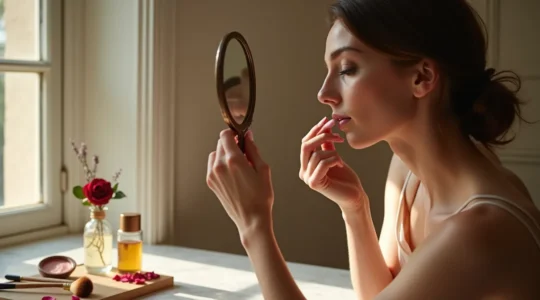
How to Master the ‘Woke Up Like This’ Makeup Look
The secret to a professional ‘no-makeup’ look isn’t using fewer products—it’s mastering techniques of light manipulation and optical illusion used for high-definition cameras. Effective ‘no-makeup’ makeup focuses on creating the illusion of health and vitality, not just coverage. Longevity is…
Read more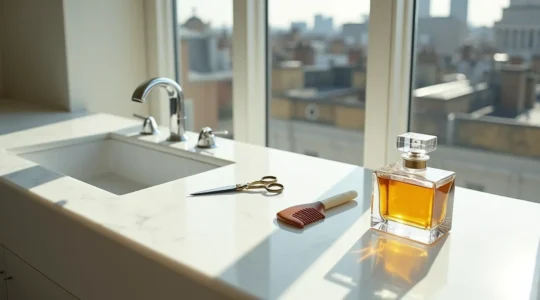
Why Meticulous Grooming Beats Designer Labels for a Truly Polished Look
The ultimate status symbol isn’t a logo; it’s the visible discipline of consistent, meticulous grooming. It signals non-verbal competence and attention to detail that expensive items can’t fake. Focusing on structural elements like hair health, nail care, and skin clarity…
Read more
How to Wear High Heels All Day Without Destroying Your Feet?
In summary: Surviving a full day in heels is not about endurance, but about engineering a system of support for your feet and body. For UK professionals, this means a dual-shoe strategy for the commute and choosing materials suited for…
Read more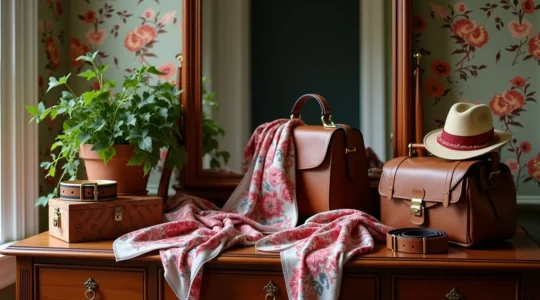
Style Alchemy: How to Use Scarves and Belts to Transform a Single Basic Dress
In summary: The challenge of travel with limited luggage can be solved by viewing accessories not as additions, but as transformative tools. A single black dress can be re-engineered for casual day trips, smart-casual events, and formal evenings using strategic…
Read more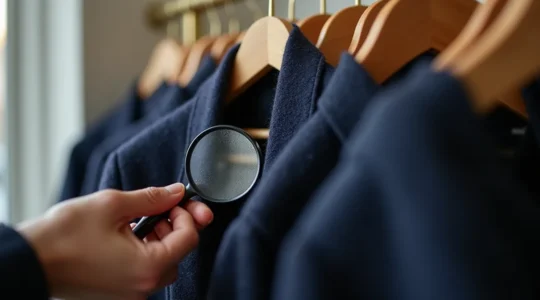
How to Distinguish Fast Fashion from Investment Apparel by Reading the Label?
Contrary to popular belief, the care label on your clothes isn’t a helpful guide; it’s a confession of quality, or a lack thereof. A “Dry Clean Only” tag on a simple viscose top is not a sign of luxury, but…
Read more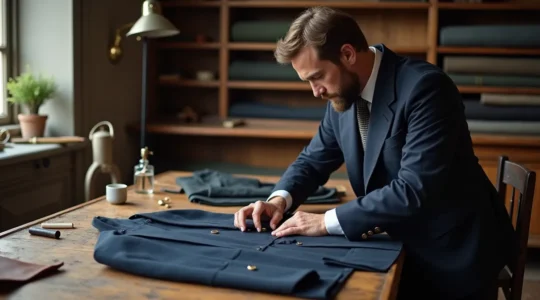
Why Is Tailoring the Single Most Important Investment for Your Appearance?
The luxury label on your suit is merely the paint; expert tailoring is the architectural foundation that gives it power and presence. A perfect fit is not about tightness but about structure, defined by the shoulder’s construction and the fabric’s…
Read more
Why Is a Capsule Wardrobe the Secret to Effortless British Elegance?
Contrary to popular belief, effortless style isn’t about owning a trench coat or a specific set of ‘classics’; it’s about mastering a strategic system. True elegance begins with understanding your unique ‘silhouette architecture’—the foundation upon which every outfit is built….
Read more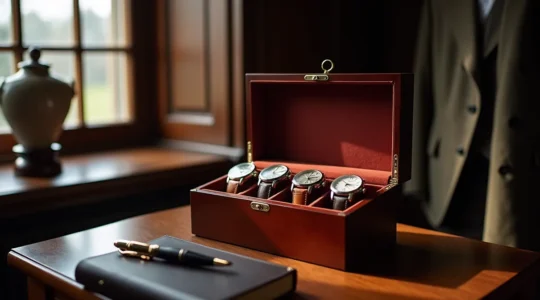
Your Watch Collection is Your Brand: A Strategist’s Guide for UK Executives
Contrary to popular belief, a powerful watch collection isn’t about acquiring status symbols; it’s about curating a portfolio of narrative tools to strategically communicate your personal brand. Each watch choice, from a minimalist to a skeleton dial, sends a deliberate…
Read more