In summary:
- The challenge of travel with limited luggage can be solved by viewing accessories not as additions, but as transformative tools.
- A single black dress can be re-engineered for casual day trips, smart-casual events, and formal evenings using strategic accessory placement.
- Scarves and belts alter a garment’s silhouette, while jewellery, hats, and glasses create new focal points and shift the context.
- This approach allows a traveller to create multiple distinct outfits from one core piece, mastering the art of sartorial illusion.
You’re staring at a suitcase, and the perennial traveller’s dilemma strikes: how to pack for a week of varied engagements in a single, carry-on-compliant bag? The solution most often touted is a capsule wardrobe, centred around a versatile piece like a simple black dress. But the common advice—”add a necklace” or “wear a belt”—barely scratches the surface. It treats accessories as mere decoration, a final flourish rather than the engine of transformation. This approach often leaves you feeling like you’re wearing the same dress, just with a different bauble attached.
The true mastery of travel style lies not in simple addition, but in a form of sartorial illusion. What if the secret wasn’t just to accessorise, but to fundamentally re-engineer the dress’s silhouette, context, and character with each piece you add? The key is to stop thinking about a scarf as just a scarf, and to start seeing it as a tool for architectural draping, capable of creating a new neckline or waistline. It’s about understanding that a well-placed belt does more than cinch; it redraws your entire figure. This is the art of the style alchemist: transforming a single, simple garment into a series of entirely new creations.
This guide moves beyond the platitudes. We will deconstruct the techniques of illusion, showing you how to manipulate fabric, light, and focus. From creating new shapes with silk scarves to altering perceived formality with the switch of a watch strap, you will learn how to make one black dress the foundation for a complete, adaptable, and effortlessly chic travel wardrobe, perfectly suited for the streets of England and beyond.
This article provides a structured path to mastering this art. The following sections will guide you through each category of accessory, revealing the specific techniques to transform your basic dress from a simple garment into a canvas for your personal style.
Summary: Style Alchemy: Transforming a Basic Dress with Strategic Accessories
- How to Tie a Silk Scarf in 3 Ways to Upgrade a White T-Shirt?
- High Waist or Low Slung: Where Should You Belt Your Coat for Your Body Type?
- How to Choose a Hat That Doesn’t Look Like a Costume?
- Why Are Glasses the Most Impactful Accessory for Your Face?
- When Is It Appropriate to Wear Patterned Tights in a Formal Setting?
- How to Layer Necklaces of Different Lengths Without Tangling?
- How to Change Watch Straps to Transform Your Look for an Evening Event?
- Which Designer Handbags Are Better Investments Than the Stock Market?
How to Tie a Silk Scarf in 3 Ways to Upgrade a White T-Shirt?
While the title suggests a t-shirt, the principle is even more potent with a basic dress. A silk scarf is not just a pop of colour; it’s a piece of fluid architecture. For a traveller with one black dress, it’s the most powerful tool for creating sartorial illusion. The global appetite for this versatility is clear, as studies project the global scarves & shawls market will reach USD 45.88 billion by 2032. For our purpose, forget the simple neck loop. We are creating new garments. First, create a cowl neck: drape a large square scarf over your shoulders and belt it at the waist over your dress, creating the illusion of a new, draped top. Second, the halter: fold the scarf into a triangle, tie the two long ends behind your neck, and tuck the point into the dress’s neckline for a completely different silhouette. Third, use it as a belt itself. Instead of a simple knot, fold your silk scarf into a thin strip and thread it through a vintage bracelet before tying. This creates a unique closure and a deliberate focal point.
Each method does more than accessorise; it fundamentally alters the dress’s structure. You’ve just packed three different tops without adding any bulk. This is the first step in style alchemy: using one item to create the illusion of many. The key is to manipulate the fabric to create new lines—draping to soften, or knotting to create a sharp, defined waist. Mastering these folds is essential for any savvy traveller looking to maximise their wardrobe with minimal pieces.
This manipulation of fabric is the foundational skill for transforming your look. It demonstrates that the most impactful changes often come from the most lightweight and versatile accessories.
High Waist or Low Slung: Where Should You Belt Your Coat for Your Body Type?
The logic of belting a coat applies directly to reshaping a simple dress. A belt is a line-drawer, a tool for bisecting your silhouette and creating new proportions at will. The question isn’t just *if* you should wear a belt, but *where*. This single decision can transform your simple black dress from a casual sheath for exploring a city like Bath into a structured, elegant outfit for a gallery opening in London. The placement of the belt is your primary tool for architectural draping. A high-waisted belt, placed just under the bust, creates an empire line. This elongates the legs and lends a formal, almost Grecian feel to the dress. It’s a classic illusion used to create height and elegance.
Conversely, a low-slung belt worn loosely on the hips introduces a relaxed, bohemian vibe. It breaks up the vertical line of the dress, creating a blouson effect on the top half and adding a sense of effortless cool. For a natural waist, using a wider belt can create an instant hourglass figure, defining your shape with authority. The key is to see the belt not as an accessory, but as a movable waistline that you control. This is how you re-engineer the dress’s inherent shape to suit the occasion and your desired aesthetic.
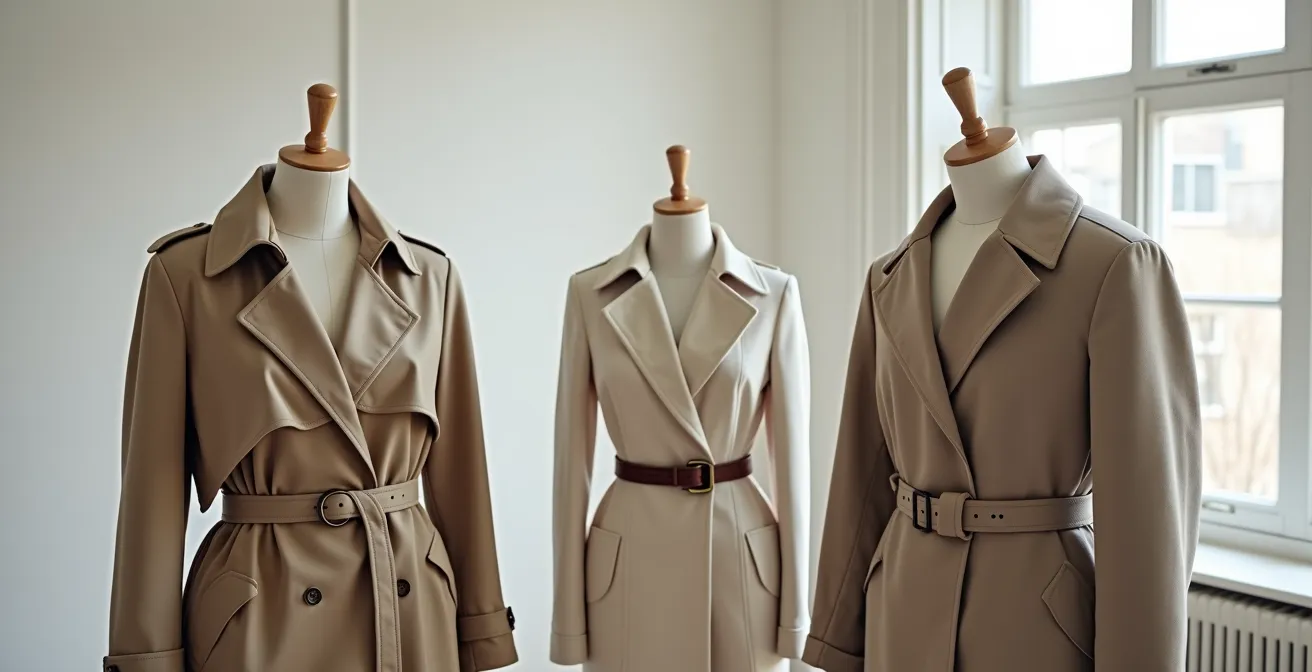
As you can see in the stylised example above, the difference in placement creates three entirely distinct silhouettes from the same foundational shape. A thin belt placed high creates a different feeling than a thick belt at the natural waist or a chain belt on the hips. Each choice tells a different story, effectively giving your one dress multiple personalities. For the traveller, this means you can pack one dress and three belts to create three different outfits with dramatically different shapes and levels of formality.
Ultimately, the belt is your most direct way to control the structure of your outfit, making it a non-negotiable tool for the minimalist traveller.
How to Choose a Hat That Doesn’t Look Like a Costume?
A hat is often the most intimidating accessory because it has the power to define a look instantly. The fear is looking like you’re in costume. The secret, especially in a style-conscious country like the UK, is context. A hat feels like a costume when it’s disconnected from the environment, occasion, or overall aesthetic. For our traveller, a hat is a fast track to a ‘contextual shift’. A simple black dress paired with a tweed baker boy cap immediately reads as casual, chic, and perfect for a day exploring the cobbled streets of the Cotswolds. The same dress, topped with an elegant sinamay fascinator, is instantly ready for a formal event like a wedding or a day at Ascot.
The key is to select a hat not just for its style, but for its material and the occasion it signals. A hat is a piece of cultural shorthand. Choosing the right one shows you understand the unspoken rules of the setting. It’s not about finding a “hat that suits you,” but about finding the hat that suits the *moment*. This is where your role as a master of illusion comes in: you are using the hat to signal a specific identity for your outfit. The dress is the constant; the hat is the variable that defines the narrative.
To navigate the specific style codes of the UK, consulting a guide on appropriate hat styles is invaluable. This ensures your choice is not only flattering but also culturally astute, preventing any costume-like missteps. As the following style guide from Good Housekeeping UK demonstrates, British hat etiquette is nuanced and tied to season and event.
| Season | Hat Style | Material | UK Occasion |
|---|---|---|---|
| Autumn/Winter | Wool Felt Fedora | Merino Wool | City breaks, Gallery visits |
| Spring/Summer | Straw Boater | Natural Straw | Garden parties, Cricket matches |
| Year-round | Baker Boy Cap | Tweed/Cotton | Casual urban wear |
| Formal Events | Fascinator | Sinamay/Feathers | Weddings, Ascot |
By selecting your hat based on the day’s agenda, you ensure it feels like an integrated and intentional part of your ensemble, rather than an afterthought.
Why Are Glasses the Most Impactful Accessory for Your Face?
While scarves and belts reshape the body, glasses reshape how people see your face—and by extension, the entire mood of your outfit. They are the ultimate tool for focal point engineering. Nothing else you wear sits so centrally and draws the eye so powerfully. For a traveller transforming a simple black dress, a change of eyewear is the most subtle yet profound shift you can make. A pair of classic, dark-rimmed glasses can lend an intellectual, artistic air to the dress, perfect for an afternoon spent in a museum or a bookshop. Swap them for a chic, cat-eye sunglass frame, and the look instantly becomes more glamorous and mysterious, ready for a stylish lunch.
The transformative power of eyewear was arguably cemented by British designers. They were among the first to see frames not as medical necessities but as core fashion statements. This history underscores their impact as a deliberate style choice.
The Cutler and Gross Effect: Eyewear as a Fashion Statement
The evolution of glasses into a high-fashion accessory owes a great deal to British brand Cutler and Gross. As noted in an analysis of top British eyewear brands, they were instrumental in this shift. By designing iconic frames for celebrities like Elton John and Lady Gaga, they demonstrated that glasses could define a personality and set global trends. This transformed eyewear from a functional item into a powerful tool for self-expression, solidifying its place as a key accessory for crafting a specific image.
For the traveller, this means packing two pairs of glasses (one optical, one sun) is as effective as packing two different tops. It’s an act of style alchemy performed on the face. The dress remains the same, but the character of the person wearing it appears to change. This is a high-impact, low-bulk strategy. The right frames don’t just help you see; they change how you are seen, making them an indispensable accessory for creating distinct looks with minimal effort.
No other accessory offers such a dramatic contextual shift with such a small footprint, making it the savvy traveller’s secret weapon.
When Is It Appropriate to Wear Patterned Tights in a Formal Setting?
Patterned tights are a bold move, a way to carry a design element from head to toe. For our traveller with the single black dress, they offer a powerful way to inject personality and adapt to the unpredictable British weather. However, their appropriateness in a formal setting is a matter of nuance, heavily dependent on the pattern’s subtlety and the specific context of the event. In a highly traditional UK corporate environment, like a law firm in Canary Wharf, patterned tights are generally a misstep. Here, the unspoken uniform calls for solid, neutral hosiery. Discretion is the guiding principle.
However, the rules relax significantly outside of these rigid contexts. For creative industries, or for formal events with a more fashionable edge, patterned tights can be a sophisticated choice. The key is the pattern itself. A delicate micro-dot, a subtle lace effect, or a fine herringbone can add texture and interest without appearing loud. These are not the novelty tights of your youth; these are high-end design elements from brands like Falke or Wolford, which offer a sophisticated nod to pattern. For a winter wedding in the English countryside, for instance, a pair of dark, subtly patterned tights is both practical and chic, a far more interesting choice than bare legs or plain opaques.
The illusion here is one of texture and depth. The black dress acts as a solid canvas, while the patterned tights create a new visual base for the entire outfit. It’s a way of wearing art on your legs, transforming the simple dress into part of a more complex and considered ensemble. The choice speaks of confidence and a keen understanding of when to adhere to tradition and when to playfully bend the rules.
When chosen correctly, they are not a risky choice but a mark of a true style aficionado who knows how to make a statement with subtlety.
How to Layer Necklaces of Different Lengths Without Tangling?
Layering necklaces is the finishing touch of style alchemy, adding light and texture directly to the skin. With a simple black dress, a curated stack of necklaces can transform a plain neckline into a detailed and personal statement. It can take the dress from a blank canvas to a finished composition. However, the biggest frustration is the inevitable tangle. The secret to a perfect, tangle-free layer lies in variation: a mix of lengths, weights, and textures. This not only prevents knotting but also creates a more visually interesting and deliberate look. Think of it as composing a small sculpture of metal on your décolletage.
The method is systematic. You begin with your longest, finest chain as an anchor. This creates the base. Next, add a medium-length chain with a contrasting texture—for example, a flat snake chain over a delicate beaded one. The different surfaces will slide against each other rather than grip. The final layer should be the shortest and often the boldest, perhaps a chunkier chain or one with a small pendant. This top piece acts as the focal point for your stack. British jewellery brands like Missoma and Monica Vinader have perfected this art, often selling curated sets that demonstrate these principles.
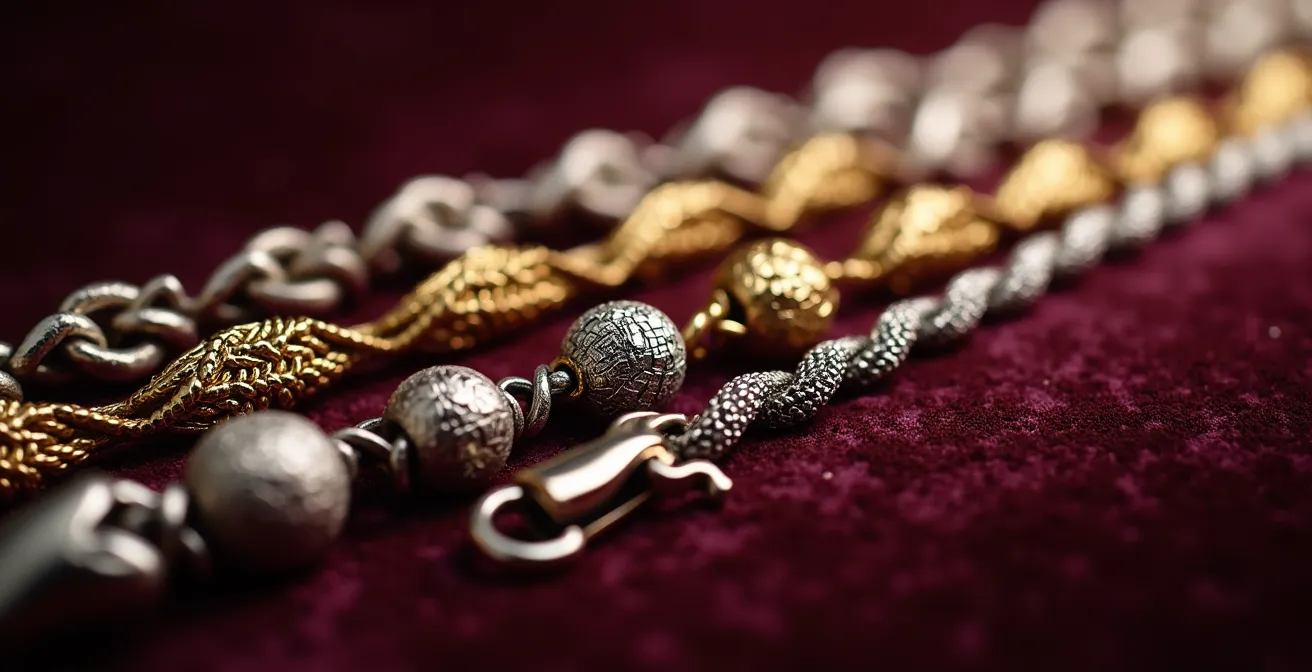
To ensure separation, a small, inexpensive tool called a necklace spacer or separator is a game-changer for travellers. This small clasp holds each chain at a fixed distance, guaranteeing a perfectly fanned-out look all day. This moves your layering from hopeful chance to intentional design.
Your Action Plan: The Art of Tangle-Free Necklace Layering
- Start with the longest, thinnest chain as your foundational base layer to set the length.
- Add a medium-length chain with a contrasting texture (e.g., a smooth snake chain over a rope chain) to prevent gripping.
- Include a shortest layer, often with a statement pendant, to act as the primary focal point.
- Use a dedicated necklace spacer or separator clasp to maintain perfect distance between each layer.
- Commit to a single metal for a cohesive look or choose intentional mixed-metal styling for a more modern feel.
By mastering this technique, you can add a dose of personal, sophisticated sparkle to your simple dress, ensuring the final effect is one of effortless elegance, not chaotic clutter.
How to Change Watch Straps to Transform Your Look for an Evening Event?
A watch is a classic, functional accessory, but its transformative power is often overlooked. The secret lies not in the watch face itself, but in its strap. For a traveller, the ability to switch a watch strap is the quickest and most efficient method for achieving a contextual shift. It’s an almost instantaneous day-to-night transformation that requires virtually no luggage space. A single watch face can be paired with multiple straps to suit wildly different occasions, making it one of the smartest investments for a capsule wardrobe. The trend towards adaptable luxury is growing, with post-Brexit economic trends influencing a rise in luxury resale and a focus on sustainable, versatile pieces.
The power of this simple swap is best illustrated by a real-world scenario common among British professionals, moving between distinct social environments.
Case Study: From a Day in the Cotswolds to a Night in Mayfair
Consider a professional spending a day on a countryside retreat in the Cotswolds. Their classic watch is fitted with a durable, tweed or leather NATO strap—practical, understated, and perfectly suited to the rural setting. Later that day, they have a formal dinner in London’s Mayfair. In under a minute, they swap the fabric strap for a polished metal bracelet or a slim, elegant satin strap. The watch is instantly transformed. The entire outfit, centred on the same simple black dress, shifts its context from casual country to sophisticated city formal. This practice, often featuring straps from independent British makers, showcases how a small detail can completely redefine a look.
This is the essence of smart travel styling. It’s not about packing more; it’s about packing smarter. A watch face and three straps (e.g., leather for day, metal for evening, and silicone for sport) take up less space than a single pair of socks but provide immense stylistic range. It’s a high-impact illusion that proves that the smallest details often have the biggest effect on your overall look. It’s a testament to the idea that true style is not about the quantity of your possessions, but the versatility you can extract from them.
By investing in a quality watch with interchangeable straps, you are not just buying a timepiece; you are buying a versatile style system.
Key Takeaways
- True travel style mastery comes from using accessories to create illusions, not just to decorate an outfit.
- A single basic dress can be fundamentally re-engineered for different occasions by altering its silhouette with scarves and belts.
- Context is everything: choosing hats, eyewear, and even hosiery based on the event and location is key to an intentional look.
Which Designer Handbags Are Better Investments Than the Stock Market?
The final element of our traveller’s transformation is the handbag. More than just a carrier for essentials, a well-chosen designer handbag is a powerful statement of intent and, increasingly, a savvy financial asset. For the traveller elevating a simple black dress, the handbag is the ultimate anchor for the entire look. While some may balk at the price, certain bags from heritage brands not only hold their value but can appreciate significantly over time, outperforming traditional investments. As Morgane Speed, Senior Editor at Lyst, notes, the market is shifting towards proven assets.
Shoppers are increasingly backing proven classics, and archival designs are re-emerging as smart investments
– Morgane Speed, Senior Editor at Lyst
This isn’t about conspicuous consumption; it’s about strategic acquisition. For a look built on a simple dress, a classic handbag like a Mulberry Bayswater or a Chanel Classic Flap provides instant “borrowed” prestige. The bag’s craftsmanship, history, and iconic status lend an air of luxury to the entire outfit. In the UK market, British heritage brands like Mulberry hold a special place, offering strong resale value due to their timeless design and national pride. You’re not just carrying a bag; you’re carrying a piece of design history that elevates everything it’s paired with.
The key is to focus on classic models in neutral colours, which have the broadest appeal and highest value retention. This data is not just anecdotal; the resale market provides clear metrics on which bags perform best.
The following table, based on recent handbag resale value statistics, highlights the top-performing models, with a specific note on their relevance in the UK market.
| Brand | Model | Resale Value Retention | UK Market Note |
|---|---|---|---|
| Hermès | Birkin/Kelly | 100%+ | Waitlist through UK boutiques |
| Chanel | Classic Flap | 92% | Strong demand at Harrods resale |
| Mulberry | Alexa/Bayswater | 65-75% | British heritage value |
| Louis Vuitton | Speedy/Neverfull | 70-80% | Popular on Vestiaire UK |
Begin your own style alchemy today by re-examining your accessories not as additions, but as the core tools for transforming your wardrobe. With these principles of illusion, one simple dress truly becomes a portfolio of endless stylistic possibilities.
Frequently Asked Questions on How to Use Scarves and Belts to Transform a Basic Dress?
Are patterned tights acceptable in Canary Wharf corporate offices?
Generally no – traditional UK corporate environments prefer solid, neutral hosiery. Save patterns for creative industries in areas like Shoreditch.
What about subtle patterns like micro-dots for country weddings?
Dark-colored patterned tights with subtle designs from brands like Falke can be appropriate for formal countryside events during colder months as a practical alternative to bare legs.
Can I wear patterned tights as a nod to British punk heritage?
Yes, when done tastefully. High-end subtle patterns like delicate lace from luxury brands available at Selfridges can sophisticatedly reference Vivienne Westwood’s influence.