Men’s Watches
A wristwatch serves as far more than a simple time-telling device. For the discerning gentleman, it represents a confluence of engineering precision, artistic craftsmanship, and personal expression. Whether you’re attending a formal dinner in Mayfair, diving off the Cornish coast, or timing intervals during a weekend cycling excursion, understanding the fundamentals of horology empowers you to select a timepiece that genuinely serves your needs whilst reflecting your character.
This resource explores the essential elements that define quality men’s watches, from the mechanical heartbeat within the case to the finishing touches that separate exceptional timepieces from ordinary ones. We’ll examine how movements function, why precision certifications matter, what complications add genuine utility, and how to navigate the etiquette of formal wristwear within British professional and social contexts.
Understanding Watch Movements and Power Sources
At the core of every timepiece lies its movement—the intricate mechanism that measures the passage of time. The fundamental choice between mechanical and quartz movements shapes not only how a watch functions but also its maintenance requirements, longevity, and philosophical appeal.
Mechanical vs Quartz Mechanisms
Mechanical movements rely on a mainspring that stores energy when wound, either manually or automatically through the wearer’s wrist motion. This centuries-old technology appeals to enthusiasts who appreciate the marriage of physics and artistry—hundreds of tiny components working in harmony, visible through exhibition casebacks. The gentle sweep of a mechanical seconds hand reflects this continuous motion, typically beating at 28,800 vibrations per hour in most contemporary calibres.
Quartz movements, by contrast, harness a battery-powered electronic oscillator regulated by a quartz crystal vibrating at 32,768 times per second. This technology delivers superior accuracy at a fraction of the cost, making it ideal for those prioritising precision over tradition. The characteristic “tick” of a quartz seconds hand reflects its discrete stepping motion, updating once per second rather than sweeping continuously.
Movement Origins and Power Reserves
The debate between in-house and supplied movements often surfaces when evaluating timepieces. Manufacture movements, developed and produced entirely within a single company, command premium prices but offer unique complications and finishing standards that demonstrate vertical integration. Supplied movements from specialists like ETA or Sellita provide proven reliability and easier servicing through Britain’s network of watchmakers, often at more accessible price points.
Power reserve—the duration a mechanical watch runs when fully wound—typically ranges from 38 to 48 hours in standard movements, though some modern calibres boast reserves exceeding 80 hours. For the professional who removes their watch each evening, this specification determines whether you’ll need to reset the time each morning or whether the watch continues running through a weekend off the wrist.
The Importance of Precision and Certification
Whilst any functioning timepiece tells the time, truly exceptional watches demonstrate measurable precision that remains consistent across varying positions and temperatures. This is where independent certification separates aspirational marketing from verifiable performance.
COSC Standards and Testing
The Contrôle Officiel Suisse des Chronomètres represents the gold standard in chronometric certification. Each movement undergoes 15 days of testing across five positions and three temperatures, measuring daily rate variations, mean daily rate, and rate stability. To earn chronometer status, a movement must maintain accuracy between -4 and +6 seconds per day—a remarkable feat considering the microscopic tolerances involved.
Interestingly, quartz movements can also achieve chronometer certification, though they face even stricter tolerances of -0.07 to +0.07 seconds daily. This reflects the inherent precision advantage of electronic regulation, though certified quartz chronometers remain relatively rare in the marketplace.
Maintaining Accuracy Over Time
Initial certification provides merely a snapshot of performance. Mechanical watches require servicing every 5-7 years to maintain their precision, involving complete disassembly, cleaning, lubrication, and regulation by qualified horologists. Many British watch specialists offer re-certification services, testing your timepiece against its original standards to verify it continues performing within chronometer specifications.
Environmental factors significantly impact timekeeping. Magnetic fields from smartphones, laptops, and security scanners can magnetise the hairspring, causing dramatic rate variations. Fortunately, modern demagnetising equipment allows watchmakers to remedy this non-invasively, restoring proper amplitude and accuracy within minutes.
Complications: Beyond Simple Timekeeping
In horological terminology, any function beyond displaying hours, minutes, and seconds constitutes a “complication.” These additional features range from eminently practical to magnificently frivolous, but understanding their purpose helps you identify which genuinely enhance your daily experience.
The Value of Horological Complications
Complications directly influence both the functional utility and market value of a timepiece. A date window adds convenience for professionals who frequently reference the calendar. A GMT function proves invaluable for those conducting business across time zones—particularly relevant for City professionals coordinating with international markets. Moon phase complications, whilst romantically appealing, serve limited practical purpose for most wearers but demonstrate technical prowess and finishing artistry.
The complexity of manufacturing affects pricing considerably. A simple date mechanism adds modest cost, whilst a perpetual calendar—which automatically adjusts for months of varying length and leap years—requires hundreds of additional components and commands prices reflecting this mechanical sophistication.
Chronograph Functions and Mechanisms
The chronograph—essentially a stopwatch function integrated into the watch—ranks among the most practical and popular complications. Beyond timing track sessions at Silverstone, chronographs prove useful for countless daily scenarios: timing cooking intervals, measuring parking durations, or calculating average speeds during road journeys.
Three main chronograph architectures exist:
- Column wheel mechanisms offer superior tactile feedback with crisp, decisive pusher action but require greater manufacturing precision
- Cam-actuated mechanisms provide reliable functionality at lower production costs, though pusher feel may seem slightly spongier
- Integrated chronographs build the timing mechanism into the base movement architecture, typically resulting in slimmer cases than modular constructions
Advanced Chronograph Features
Flyback chronographs allow instantaneous reset and restart with a single pusher press, eliminating the traditional stop-reset-restart sequence. Originally developed for aviation navigation, this function proves genuinely useful when timing consecutive intervals—whether laps around a circuit or successive cooking stages.
Split-seconds (rattrapante) chronographs feature two superimposed seconds hands, allowing you to time intermediate intervals whilst the chronograph continues running. Pressing the split pusher stops one hand for reading whilst the other continues, then pressing again reunites them. This complication serves niche purposes—timing multiple competitors in a race, for instance—but represents extraordinary mechanical complexity.
When evaluating chronographs, assess sub-dial legibility carefully. Complications lose utility if you cannot quickly read elapsed time. Well-designed chronographs provide clear visual hierarchy, with appropriately sized sub-dials and contrasting colours. Consider too that chronographs drain power reserves more quickly when running, typically reducing the advertised reserve by 20-30%.
Dive Watches and Robust Timepieces
Britain’s maritime heritage and active outdoor culture create natural affinity for robust sports watches. Whether you’re genuinely diving in Scottish lochs or simply desire a resilient daily wearer that tolerates desk-diving in demanding office environments, understanding dive watch standards ensures you’re purchasing genuine capability rather than mere aesthetic.
ISO Standards and Practical Requirements
ISO 6425 establishes the international standard for dive watches, mandating specific features: water resistance to at least 100 metres, a unidirectional rotating bezel for timing immersion, visibility at 25cm in darkness, magnetic resistance, shock resistance, and resistance to salt water and other corrosive environments. Watches meeting these requirements display “DIVER’S” on the dial.
For actual diving, professionals recommend water resistance exceeding your maximum depth by a factor of two. Surface activities like swimming or snorkelling require 100-metre ratings at minimum, whilst serious diving demands 200-300 metres. Remember that water resistance deteriorates over time as gaskets age, necessitating regular pressure testing—most British watchmakers offer this service for £20-30.
Visibility and Luminescence
Lume brightness determines whether you can actually read your watch in darkness or murky water. Modern dive watches typically employ Super-LumiNova or Chromalight compounds, which absorb light energy and emit it gradually. Quality matters enormously: premium applications glow brightly for 8-10 hours after charging, whilst inferior treatments fade within minutes.
Effective lume application requires sufficient material thickness and appropriate colour contrast. Blue or green emission typically appears brightest to human eyes in darkness, whilst some manufacturers employ different colours for hour and minute hands to prevent confusion when reading time quickly in low visibility.
Craftsmanship and Finishing
Watch finishing exists on a spectrum from purely functional to extraordinarily refined. Understanding this hierarchy helps you appreciate why visually similar watches command vastly different prices. Basic finishing ensures components function reliably: deburred edges, functional plating, machine-applied decoration. Premium finishing elevates components to miniature artworks: hand-bevelled edges catching light at precise angles, Côtes de Genève or perlage decoration applied by skilled artisans, mirror-polished surfaces requiring hours of patient work.
Innovation within traditional mechanics represents another value dimension. Manufacturers like Seiko pioneered the Spring Drive—a hybrid movement combining mechanical power with electronic regulation—whilst others developed silicon components that resist magnetism and temperature variations. These innovations typically command premium pricing during their early years before gradually becoming more accessible as production scales.
When examining finishing through a loupe or exhibition caseback, look for crisp bevelling with no rounded edges, consistent decoration patterns, and absence of machining marks. The finest finishing appears on components you’ll never see—a philosophy suggesting the watchmaker pursues perfection for its own sake rather than merely for marketing purposes.
Styling Your Timepiece for British Occasions
Traditional British etiquette regarding formal wristwear follows clear principles, though contemporary interpretations allow greater flexibility than previous generations demanded. For black-tie occasions, classic guidance suggests slim dress watches in precious metals with leather straps—nothing that might scratch a partner during dancing or protrude beneath a dinner jacket cuff. The watch should whisper discretely rather than shout for attention.
Business formal contexts in the City traditionally favoured conservative timepieces: simple three-hand watches or modest complications like dates, in steel or gold, on leather straps. Chronographs occupied the boundary of acceptability, whilst dive watches firmly resided in casual territory. Contemporary workplaces demonstrate more latitude, though erring towards understated elegance rarely proves incorrect.
Sizing standards for classic men’s watches have evolved considerably. Vintage dress watches typically measured 34-36mm in diameter, whilst contemporary preferences favour 38-42mm for most wrist sizes. The key measurement isn’t diameter alone but lug-to-lug distance—the span between strap attachment points. This should not exceed your wrist width, as overhanging lugs create visual imbalance and physical discomfort. When trying watches, ensure you can slide a finger beneath the strap without excessive looseness, indicating proper fit.
Understanding these fundamental elements—from the mechanical heartbeat within to the finishing that demonstrates artisanal skill, from precision certification to appropriate styling—equips you to navigate the world of men’s watches with confidence. Each aspect contributes to the complete picture, transforming a simple timekeeping device into a considered choice that serves your practical needs whilst reflecting your appreciation for engineering excellence and traditional craftsmanship.
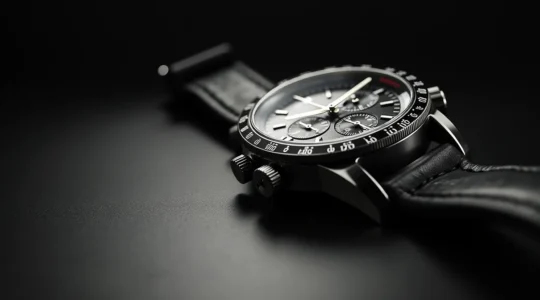
How to Use a Tachymeter Like a 1960s Racer: A Real-World Guide
That beautiful, complex scale on your chronograph’s bezel often feels more like a decoration than a tool. This guide changes that. From the perspective of a classic car racer, we’ll show you how to use the tachymeter as it was…
Read more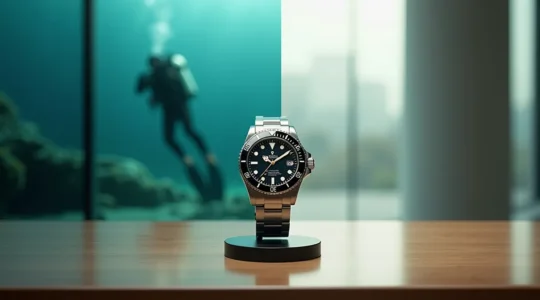
How to Choose a Diver’s Watch That Suits Both the North Sea and the Office?
The perfect diver’s watch for a British lifestyle isn’t about having the highest specs, but about understanding the practical trade-offs between durability and daily wearability. Water resistance ratings are theoretical; a 200m minimum is essential for actual water sports like…
Read more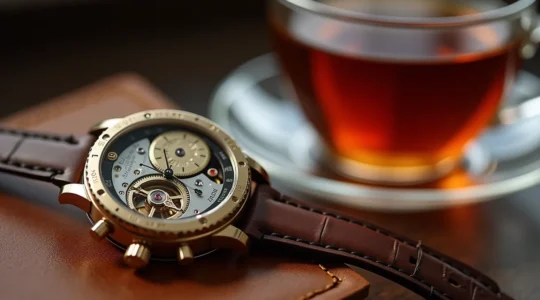
Is Paying Extra for a COSC Certified Chronometer Worth It for Daily Wear?
For a data-driven buyer, a COSC certificate is not a luxury accessory but a quantifiable guarantee of system reliability, proven to withstand real-world UK conditions. The -4/+6 second tolerance is validated through a 15-day torture test simulating positional and temperature…
Read more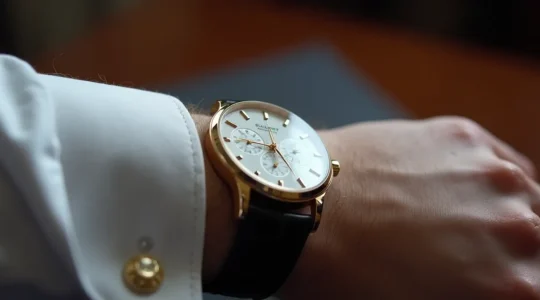
What Are the Unspoken Rules of Wearing a Dress Watch with a Tuxedo?
Wearing the correct watch to a formal event is not about telling the time; it is about signalling that you belong. Your watch must be thin enough to disappear discreetly under your shirt cuff. A simple, time-only dial communicates focus…
Read more