Women’s Watches
A watch does far more than tell time—it’s a deeply personal accessory that bridges function and self-expression. For women navigating the world of horology, the sheer variety of styles, mechanisms, and sizing options can feel overwhelming. From the practicalities of wrist proportions to the symbolism of a statement piece worn into a boardroom, each choice carries weight. Understanding these fundamentals transforms what might seem like a daunting purchase into an empowering decision.
This comprehensive resource demystifies the core elements that define women’s watches. Whether you’re seeking a reliable daily companion, a jewellery piece for special occasions, or a timepiece that commands professional respect, you’ll discover the technical knowledge and practical insights needed to choose with confidence. We’ll explore how sizing truly works, what powers your watch, and why certain styles resonate in specific contexts—all explained clearly, without jargon.
Finding Your Perfect Everyday Timepiece
The foundation of any watch collection is a dependable daily wear piece—one that feels invisible on your wrist whilst quietly complementing every outfit. Yet achieving this harmony requires understanding three interconnected factors that many overlook until after purchase.
Understanding Wrist Proportions and Sizing
Wrist measurement extends beyond a simple diameter number. Your wrist circumference determines strap length, but it’s the relationship between case diameter and your wrist’s top surface that dictates visual balance. A common misconception assumes women require tiny watches, yet proportions matter more than arbitrary size rules.
For context, measure your wrist at its narrowest point, just below the wrist bone. UK women’s wrists typically range from 140mm to 180mm in circumference. A petite wrist (under 150mm) pairs beautifully with cases between 26mm and 34mm, whilst average wrists (150mm-165mm) can comfortably carry 32mm to 38mm cases. Larger wrists welcome anything from 36mm upward, including oversized styles that have gained popularity in recent years.
The lug-to-lug measurement—the distance from where the strap attaches at top to bottom—proves equally crucial. If this dimension exceeds your wrist’s width, the watch will overhang awkwardly, creating discomfort and an unbalanced appearance. Always try watches in person when possible, as photographs distort scale.
Comfort and Weight Considerations
Weight distribution determines whether you’ll actually wear a watch daily or relegate it to the drawer. Stainless steel cases offer durability but can feel substantial, particularly in larger sizes. Titanium alternatives provide similar strength at roughly half the weight—a game-changer for those sensitive to wrist fatigue.
Bracelet versus strap choice amplifies these differences. A full metal bracelet adds considerable weight compared to leather or fabric alternatives, though modern engineering has introduced hollow-link designs that reduce mass without sacrificing structural integrity. Consider these practical factors:
- Daily computer work: Lighter watches prevent wrist strain during typing
- Active lifestyles: Secure clasps and moderate weight prevent shifting during movement
- Warm climates: Breathable NATO straps or perforated leather improve comfort over metal bracelets
- Jewellery layering: Slimmer profiles (under 10mm thickness) sit better alongside bracelets
The case shape also influences how weight feels. Curved lugs that follow your wrist’s contour distribute pressure more evenly than flat, geometric designs—a subtle detail that dramatically affects all-day wearability.
Movement Types: What Powers Your Watch?
Beneath every dial lies the engine that brings your watch to life. Understanding movement types isn’t about technical obsession—it’s about matching the mechanism to your lifestyle and maintenance preferences.
Mechanical vs Quartz Movements
Mechanical movements represent traditional watchmaking, powered by a wound mainspring that releases energy through an intricate system of gears and springs. Automatic (self-winding) variants harness your wrist’s natural motion to maintain power, whilst manual versions require daily winding. The appeal extends beyond romance—mechanical watches need no battery replacements and, with proper servicing every 3-5 years, can last generations.
However, they demand commitment. Accuracy typically ranges from -10 to +30 seconds daily, and they’re sensitive to shocks and magnetic fields. For enthusiasts who appreciate craftsmanship and the subtle sweep of a mechanical seconds hand, these trade-offs feel worthwhile.
Quartz movements, introduced in the 1970s, revolutionised accessibility. A battery sends electrical current through a quartz crystal, creating vibrations that power the watch with remarkable precision—often within 15 seconds per month. The advantages prove compelling for practical-minded wearers:
- Minimal maintenance (battery replacement every 2-3 years)
- Superior accuracy for time-critical professions
- Thinner case profiles enabling sleeker designs
- Significantly lower entry prices
The notion that quartz equals inferior quality is outdated. High-end brands produce exceptional quartz movements that prioritise reliability over mechanical theatre.
Why Quartz Dominates Jewellery Watches
When a watch functions primarily as jewellery—adorned with diamonds, intricate metalwork, or precious stones—quartz becomes the logical choice. Slim quartz calibres allow designers to prioritise aesthetics over movement showcase, creating elegant profiles impossible with bulkier mechanical movements.
Additionally, jewellery watches often serve as occasional-wear pieces. Mechanical watches that sit unworn for days lose power and require resetting, whilst quartz movements simply continue ticking, ready whenever you reach for them. The practicality aligns perfectly with how these pieces actually get worn—intermittently, for special events or specific outfits, rather than daily rotation.
Statement Watches for Professional Presence
In boardrooms and client meetings across England, a considered timepiece subtly communicates attention to detail and self-assurance. This isn’t about ostentation—it’s understanding how certain design choices project confidence and competence.
The Power of Brand Perception
Brand recognition carries nuanced weight in professional contexts. Established watchmakers signal that you’ve invested in quality and understand the language of business accessories. Yet the goal isn’t simply wearing the most expensive logo—it’s choosing brands that align with your industry and personal values.
In traditional sectors like law, finance, or consultancy, classic Swiss brands speak a universally understood dialect. Their heritage implies reliability and serious intent. Creative industries, meanwhile, reward more distinctive choices—independent brands or vintage pieces that suggest individuality and cultural awareness.
British professionals often gravitate towards understated excellence over flashy displays. A well-chosen mid-tier Swiss watch or a quality British brand demonstrates discernment without appearing try-hard. The key lies in authenticity: wear what genuinely resonates rather than what you think others expect.
Diamonds or Minimalist Dials?
The diamond-set watch occupies a fascinating position in professional dressing. Subtle diamond hour markers on an otherwise restrained dial can add refined sparkle appropriate for client-facing roles, whilst full pavé bezels risk appearing more decorative than functional—potentially undermining credibility in certain environments.
Context determines appropriateness. A marketing director attending industry events might successfully wear more expressive diamond pieces, whilst a barrister appearing in court likely benefits from unadorned elegance. Consider these guidelines:
- Conservative professions: Limit embellishments to small diamond indices or a single row of bezel stones
- Creative fields: Express personality through unusual dial colours or vintage-inspired designs rather than excessive gemstones
- Entrepreneurial roles: Choose pieces that reflect your brand’s aesthetic—minimalist if your company values sleek modernity, more elaborate if luxury aligns with your offering
Minimalist dials with clean lines never misfire. They project clarity, precision, and focus—qualities universally valued across professional spheres. When uncertain, err towards restraint.
Cocktail Watches: Glamour for Special Occasions
Evening events demand a different horological approach entirely. Here, watches transform into jewellery that happens to tell time, embracing the decorative freedom that daytime propriety constrains.
What Defines a Cocktail Watch?
The cocktail watch emerged in the mid-twentieth century as a distinctly feminine accessory for after-dark socialising. Unlike sports watches or dress watches, these pieces prioritise visual impact and precious materials over practical considerations like legibility or water resistance.
Defining characteristics include smaller case sizes (often 20mm-28mm), unconventional shapes (asymmetric, oval, or geometric), luxurious bracelets that integrate seamlessly with the case, and generous use of diamonds, coloured gemstones, or artistic dials. The watch becomes a bracelet with timekeeping as a secondary function—a philosophy that liberates designers to explore purely aesthetic possibilities.
Modern interpretations range from vintage-faithful reproductions to contemporary pieces that channel the spirit through unexpected materials like ceramic or rose gold. What unites them is an unapologetic embrace of decoration and femininity.
Adapting Vintage Elegance for Modern Events
Vintage cocktail watches offer charm that contemporary pieces struggle to replicate, yet wearing them successfully requires thoughtful styling. A 1960s gem-set piece pairs beautifully with modern minimalist gowns, creating sophisticated contrast, whilst matching it with overtly vintage clothing risks costume rather than curated style.
When selecting vintage pieces, verify the movement has been recently serviced, as decades-old mechanisms require expert attention. Original bracelets may need adjustment for contemporary wrist sizes—many vintage ladies’ watches were designed for smaller proportions than current preferences favour.
For those hesitant about vintage maintenance, several contemporary brands produce cocktail-inspired designs with modern reliability. These offer the aesthetic appeal without the technical uncertainties, using quartz movements that require minimal upkeep whilst delivering the decorative impact special occasions deserve.
Choosing a watch ultimately reflects understanding yourself—your lifestyle rhythms, aesthetic preferences, and the contexts you navigate daily. The technical knowledge around sizing, movements, and style categories simply provides vocabulary for articulating what your instincts already sense. Trust that intuition, informed by the fundamentals explored here, and you’ll find timepieces that feel like natural extensions of who you are.
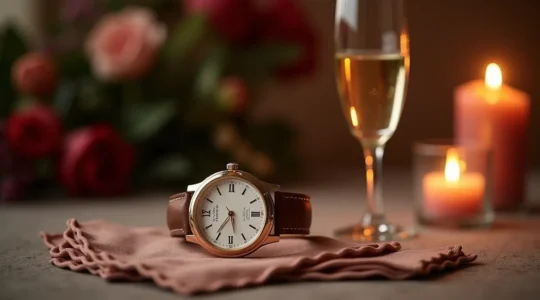
How to Style a Cocktail Watch for a Modern Black Tie Wedding?
A vintage cocktail watch is the secret to looking effortlessly chic at a modern wedding, functioning as sophisticated jewellery rather than just a timepiece. It excels on slender wrists due to its inherent, delicate proportions, creating perfect visual balance. Styling…
Read more
Why a Statement Timepiece Is the New Power Suit for Female Executives
For female leaders, a statement watch isn’t about telling time; it’s about commanding it. It acts as a ‘horological anchor’, a tool for maintaining presence and focus in high-stakes meetings. Choosing ‘in-the-know’ brands over obvious luxury signals intelligence and discernment,…
Read more
How to Select a Ladies’ Watch That Suits Both the Boardroom and the Weekend?
Choosing the right watch is an investment in your personal brand, where ‘cost per wear’ trumps fleeting trends. Focus on versatile ‘unisex’ case sizes (36-39mm) which often provide better presence and long-term value. Prioritise automatic movements and Tier 1 brands…
Read more