Blog
The world of fine watchmaking represents one of humanity’s most enduring pursuits of precision engineering. For centuries, Swiss horologists have refined their craft to create timepieces that blend mechanical artistry with exceptional reliability. Whether you’re considering your first luxury watch purchase or seeking to deepen your appreciation for the complications on your wrist, understanding the fundamental principles behind these instruments transforms them from mere accessories into fascinating examples of applied physics and traditional craftsmanship.
This exploration of Swiss horology examines the technical standards, materials, and traditions that define mechanical excellence. From the legal protections surrounding the Swiss Made designation to the practical realities of maintaining a mechanical movement, we’ll demystify the terminology and specifications that initially appear daunting to newcomers. The objective isn’t to turn you into a watchmaker, but rather to equip you with the knowledge to make informed decisions and truly appreciate the engineering marvel ticking away on your wrist.
What Makes Swiss Watchmaking Exceptional?
The reputation of Swiss watchmaking didn’t emerge by accident. It evolved through centuries of refinement in the valleys of the Jura Mountains, where specialist craftsmen developed techniques passed down through generations. Today, this heritage manifests in rigorous quality standards and a deeply embedded culture of precision that permeates every aspect of production.
The Swiss Made label carries specific legal implications established by Swiss federal law. For a watch to bear this prestigious designation, at least 60% of its manufacturing costs must originate in Switzerland, its movement must be Swiss, and final inspection must occur within Swiss borders. This isn’t merely marketing—it’s a legally protected standard that British consumers can rely upon when investing in a Swiss timepiece. Watches meeting these criteria typically command premium prices in the UK market, with even entry-level Swiss mechanical watches starting around £500-800.
Beyond legal definitions, Swiss exports demonstrate consistently superior engineering standards. Independent testing reveals that Swiss movements maintain accuracy within tighter tolerances than most international competitors. The country’s watchmaking infrastructure includes specialized institutions like the COSC (Contrôle Officiel Suisse des Chronomètres), which certifies chronometer-grade movements that meet exacting precision requirements. Understanding these standards helps explain why Swiss pieces retain value better than alternatives when browsing the thriving pre-owned market in London’s Burlington Arcade or Manchester’s specialist dealers.
Understanding Mechanical Movement Fundamentals
At the heart of every automatic watch lies an ingenious system that converts physical motion into stored energy. The winding rotor—a semi-circular weight visible through exhibition casebacks—pivots freely as you move your wrist, winding the mainspring through a series of gears and reduction wheels.
How the Automatic Winding System Works
Think of the winding rotor as a tiny perpetual motion generator. Each rotation transfers energy through a clutch mechanism to the mainspring barrel, where it’s stored as potential energy. The efficiency of this system determines how much daily wear your watch requires to maintain full power reserve. High-quality Swiss movements feature ball-bearing mounted rotors that reduce friction and increase winding efficiency, meaning your watch stays powered even during relatively sedentary office days.
Power Reserve: Your Watch’s Energy Storage
Power reserve indicates how long your fully wound watch will continue running without additional winding. Entry-level movements typically offer 38-42 hours, whilst premium calibres may provide 70-80 hours or more. This specification has practical implications: a 40-hour power reserve means your watch will stop if you remove it Friday evening and don’t wear it again until Monday morning. For collectors rotating between multiple pieces, longer power reserves reduce the frequency of resetting time and date—a genuine convenience factor worth considering.
Dispelling Overwinding Myths
A persistent misconception suggests that manual winding can damage automatic movements. Modern Swiss watches incorporate slipping clutch mechanisms that prevent overwinding damage. Once the mainspring reaches full tension, the clutch simply disengages, allowing the crown to spin freely without adding further tension. You cannot harm your watch through manual winding—feel free to give your automatic a few turns before wearing if it’s stopped overnight.
Key Performance Standards and Ratings
Understanding the specifications stamped on your watch’s caseback or cited in its documentation helps set realistic expectations for performance and durability.
Accuracy Ratings and What They Actually Mean
Mechanical watches don’t match quartz precision—and that’s perfectly acceptable. Standard Swiss movements typically achieve -10 to +30 seconds daily variation, whilst COSC-certified chronometers must remain within -4 to +6 seconds daily. These tolerances might seem imprecise compared to your smartphone, but represent extraordinary mechanical achievement. A chronometer-grade movement maintains accuracy within roughly 2-3 minutes monthly—remarkable for a device relying entirely on springs, wheels, and escapements with no electronic components whatsoever.
Several factors affect mechanical precision beyond the movement’s inherent quality:
- Position: watches run at different rates depending whether dial-up, crown-down, or on your wrist
- Temperature variations: mainspring tension changes with ambient temperature
- Service history: degraded lubricants increase friction and reduce accuracy
- Magnetization: exposure to magnetic fields can accelerate or decelerate the balance wheel
Water Resistance: Understanding the Numbers
Water resistance ratings confuse many newcomers because they don’t directly correspond to safe diving depths. A watch rated to 50 metres isn’t safe for swimming—it indicates pressure resistance equivalent to 50 metres of static water depth, not dynamic water exposure. Here’s what ratings actually mean for daily wear:
- 30m: Splash resistant only—avoid submersion entirely
- 50m: Light swimming acceptable, but no diving or water sports
- 100m: Suitable for recreational swimming and snorkelling
- 200m+: Appropriate for serious diving activities
For British wearers facing frequent rain, a minimum 100-metre rating provides comfortable peace of mind during handwashing, unexpected downpours, or washing up after Sunday lunch.
Shock Resistance and Anti-Magnetic Properties
Modern Swiss watches incorporate specific protections against common hazards. Shock resistance standards—typically tested to ISO 1413—ensure watches withstand impacts equivalent to dropping from one metre onto a hardwood floor. Most Swiss pieces easily pass this threshold thanks to spring-mounted balance wheel assemblies that cushion the delicate pivots.
Anti-magnetic properties have become increasingly relevant as we navigate environments filled with electronic devices. Traditional movements can be disrupted by magnetic fields exceeding 60-80 gauss—easily generated by laptop speakers, magnetic phone mounts, or induction cooktops. Premium movements now incorporate silicon hairsprings and soft-iron inner cases that shield against fields exceeding 15,000 gauss, eliminating magnetization concerns for typical daily exposure.
Materials and Craftsmanship
The materials selected for watch cases significantly impact durability, aesthetics, and price. Most Swiss watches employ stainless steel alloys, but not all steel offers identical properties.
316L Versus 904L Stainless Steel
316L steel represents the industry standard—highly corrosion resistant, easily worked, and cost-effective. The “L” designation indicates low carbon content, reducing the risk of carbide precipitation during welding and polishing. This alloy serves admirably for decades of wear, explaining its near-universal adoption across Swiss watchmaking.
By contrast, 904L steel—notably used by Rolex—offers superior corrosion resistance and a slightly brighter lustre after polishing. Originally developed for chemical processing industries, it contains higher chromium and molybdenum percentages. However, its advantages for watch applications remain modest: unless you’re regularly diving in saltwater or exposed to industrial chemicals, 316L performs identically for typical British weather and wear patterns. The 904L premium primarily delivers marketing distinction rather than practical superiority for most wearers.
Beyond steel, Swiss manufacturers employ materials including titanium (lighter, hypoallergenic), ceramic (scratch-resistant), and precious metals. Your choice should prioritize comfort, aesthetic preference, and intended use rather than presuming exotic materials inherently indicate superior watchmaking.
Caring for Your Mechanical Timepiece
Mechanical watches require periodic maintenance to sustain optimal performance—an aspect sometimes overlooked by first-time buyers accustomed to maintenance-free quartz pieces.
Recommended maintenance schedules for Swiss mechanical watches typically suggest servicing every 5-7 years, though this varies based on manufacturer recommendations and your watch’s specific complications. During service, watchmakers completely disassemble the movement, clean all components ultrasonically, replace degraded lubricants, adjust timing, and test water resistance. Expect to pay £200-400 for standard three-hand movements at authorized UK service centres, with costs increasing significantly for complicated movements featuring chronographs or perpetual cale

Swiss Watch Reliability: Why It’s a Critical Tool for UK Doctors and Pilots
‘Swiss Reliability’ is not a marketing term; it is a tangible engineering framework designed to withstand the specific operational hazards faced by medical and aviation professionals. It actively counters physical shocks through systems like Incabloc, protecting the mechanism’s integrity during…
Read more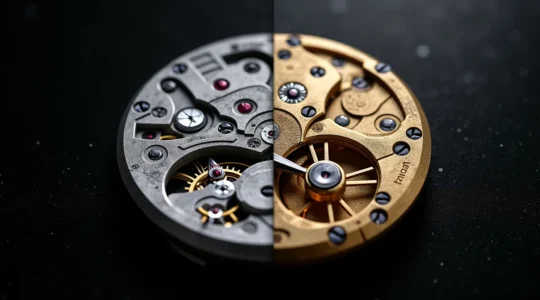
How to Distinguish True Haute Horlogerie from Mass-Produced Luxury?
The true worth of a fine timepiece lies not in its marketing, but in its verifiable mechanical integrity and invisible artistry. Hand-finishing, invisible to the naked eye, can represent hundreds of hours of manual labour and is the primary driver…
Read more